One of the first questions people ask when they start thinking about a greenhouse is also one of the hardest to answer.
What size greenhouse do I need?
The honest answer is that there is no one perfect size for everyone. The right greenhouse size depends on what you want to grow, how you plan to use it, how much space you have, and how you see your gardening habits evolving over time.
This guide is designed to help you think through those factors step by step, so you can choose a greenhouse size that feels right now and still works for you years down the road. It’s the same conversation our team has every day with gardeners who are just getting started.
The Short Answer Most People Are Looking For
If you are early in your research, here is the simplest truth.
One thing we hear again and again from first-time greenhouse owners is that they wish they had gone slightly bigger.
That does not mean you need a massive structure or a commercial setup. It means greenhouses tend to fill up faster than expected, especially once you start seed starting, growing vertically, or experimenting with new crops.
A greenhouse that feels generous on paper can feel cozy within a season or two.
Start With How You Want to Use Your Greenhouse
Before you think in square feet, start with purpose. The way you plan to use your greenhouse matters more than the exact dimensions.
Some common greenhouse goals include:
- Starting seeds in early spring
- Extending the growing season for vegetables
- Growing enough food to meaningfully supplement groceries
- Protecting tender plants or overwintering perennials
- Growing tall plants, citrus trees, or vines
- Creating a year-round gardening space you can walk into and enjoy
A greenhouse used only for seed starting has very different space needs than one meant for full-season food production or year-round growing.
While growing plants is the main goal for most people, it is not the only way a greenhouse gets used over time. Many greenhouse owners find themselves spending more time inside than they expected. That might mean standing at a potting bench, checking seedlings with a cup of coffee, or simply enjoying being surrounded by greenery during colder months.
Even if you do not plan to use your greenhouse as a seating area, comfort still matters. When thinking about size, consider whether you want room to comfortably move, turn, work, and pause without constantly stepping over plants. A greenhouse that technically fits your plants but feels tight to work in can become frustrating over time.
Small Greenhouses: Who They Work Best For
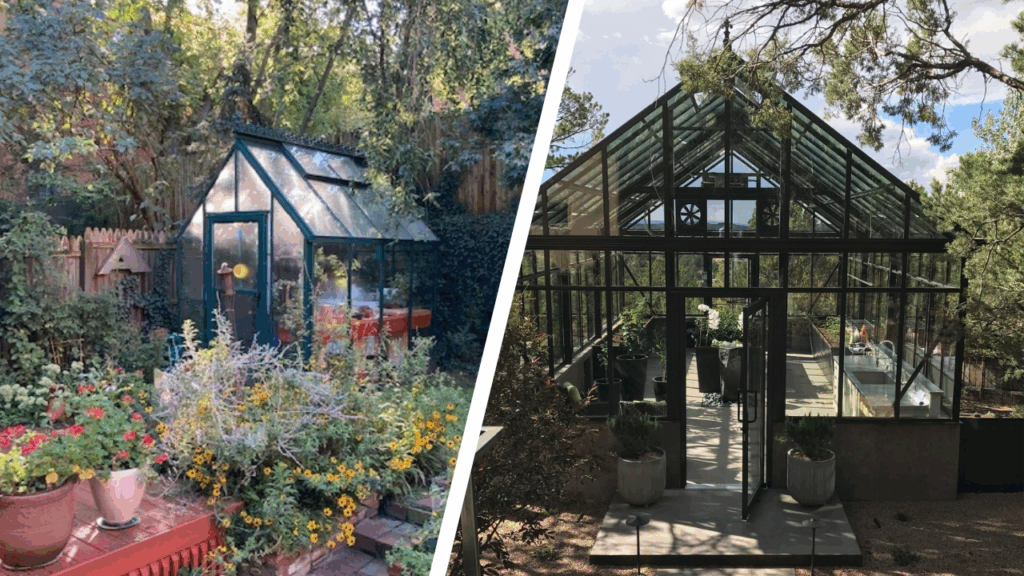
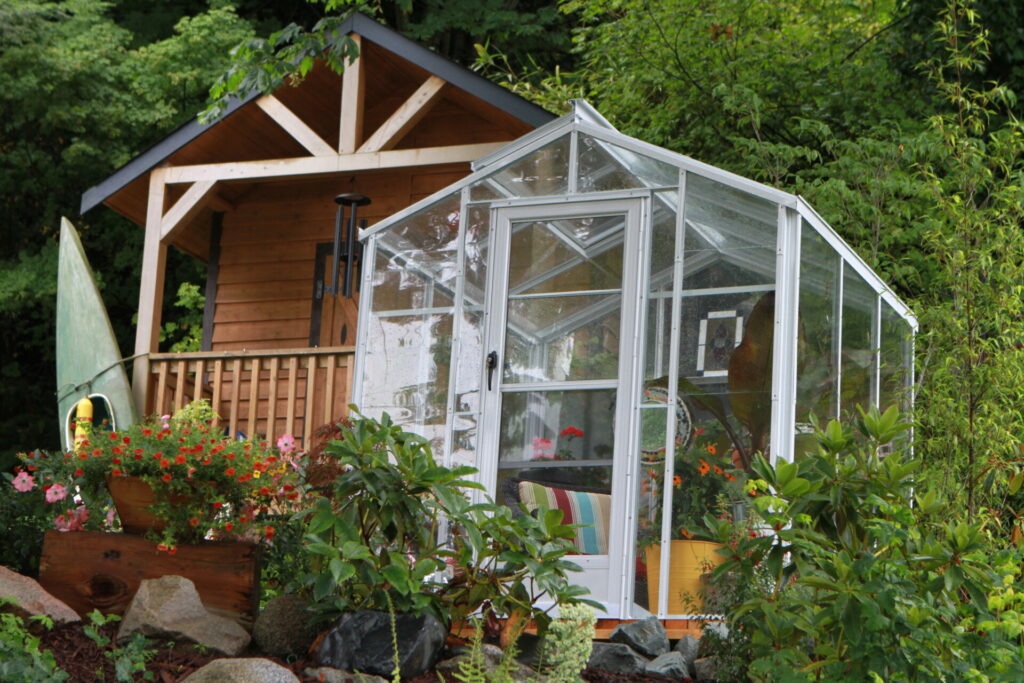
Smaller greenhouses are often the starting point for new buyers, especially those in urban environments with limited yard space or who want to test the waters.
A small greenhouse is typically in the range of 6×8, 6×10, or 8×8.
These sizes can work well if:
- Your main goal is seed starting
- You garden for one or two people
- You have a small or urban yard
- You want a compact footprint that feels manageable
- You plan to grow mostly in pots or trays
In a small greenhouse, organization and vertical growing make a big difference. Shelving, benches, hanging baskets, and wall space are key to making the most of the footprint.
What often surprises people is how quickly a small greenhouse fills once seedlings are potted up, or plants start growing taller and wider.
Medium Greenhouses: The Most Popular Choice
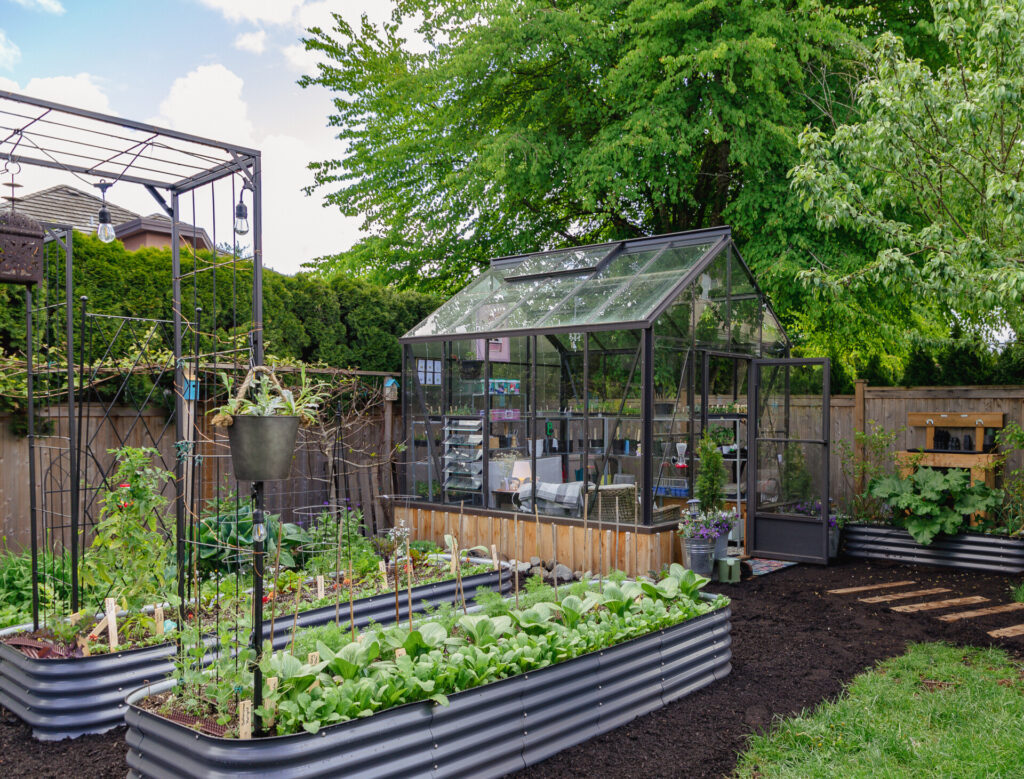
Medium-sized greenhouses are often considered the sweet spot for backyard growers. Common sizes include 8×10, 8×12, and 10×12.
These sizes are popular because they balance flexibility with a reasonable footprint.
A medium greenhouse is a good fit if:
- You want to grow vegetables throughout much of the year
- You want room to move comfortably inside
- You plan to start seeds, grow mature plants, and overwinter some crops
- You want space for benches plus an open floor for growing
- You want space for both growing plants and spending time inside your greenhouse
- You expect your gardening interests to expand
For many households, an 8×12 greenhouse feels like a major upgrade from outdoor gardening without being overwhelming. It allows you to dedicate zones for different uses, such as seed starting on one side and larger plants on the other, with enough room left over to comfortably enjoy the space. Some gardeners even add a small bistro table and chairs, creating a quiet spot to sit with a cup of coffee and listen to the birds while their plants soak up the morning light.
Large Greenhouses: Growing With Intention
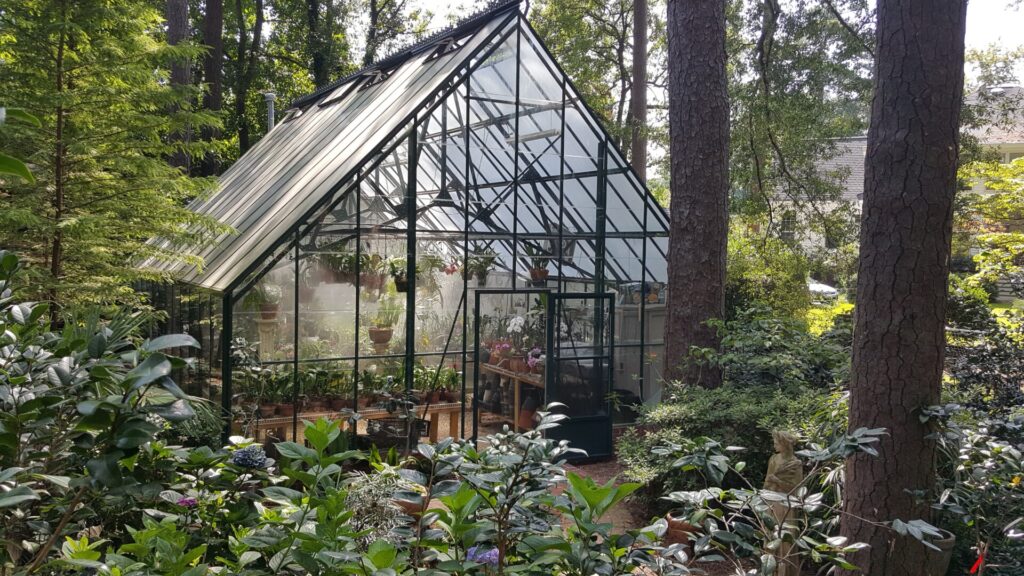
Larger greenhouses often start at 12×16 and go up from there.
These are ideal for gardeners who are serious about food production or who want a greenhouse to be a central feature of their lifestyle.
A large greenhouse makes sense if:
- You want to grow a significant portion of your own food
- You plan to garden year-round
- You grow tall crops like tomatoes, cucumbers, or fruit trees
- You want room for work tables, storage, or seating
- You want space for both growing and relaxing in your greenhouse
- You want to future-proof your investment
Larger greenhouses also offer better temperature stability. More air volume means fewer dramatic temperature swings, making plant care easier and more forgiving.
How Much Can You Grow in Different Greenhouse Sizes?
This is one of the most common questions tied to greenhouse size.
While exact yields depend on crops, climate, and growing methods, here is a general way to think about it.
A smaller greenhouse can support:
- Hundreds of seedlings in spring
- Several mature vegetable plants at a time
- Herbs, greens, and compact crops
A medium greenhouse can support:
- Continuous vegetable production
- Warm-season crops alongside cool-season greens
- A mix of pots, raised beds, and vertical growing
A larger greenhouse can support:
- Multiple growing zones
- High yields of tomatoes, peppers, and cucumbers
- Overwintering citrus or perennials
- Enough produce to meaningfully offset grocery costs
Many gardeners are surprised by how productive even a modest greenhouse can be when planned well.
Why Greenhouse Height Matters as Much as Floor Space
When thinking about size, people often focus only on the length and width of the footprint. Height is just as important.
Taller greenhouses allow for:
- Better air circulation
- More stable temperatures
- Vertical growing and trellising
- Hanging baskets and overhead storage
- Taller plants like indeterminate tomatoes or fruit trees
A greenhouse with more headroom often feels more comfortable and more flexible, even if the footprint is similar to a shorter structure.
Yard Space and Greenhouse Placement Considerations
Your available space will naturally influence your decision, but it is worth measuring carefully and thinking long term.
Ask yourself:
- Where does the sun hit my yard most consistently?
- How close do I want the greenhouse to the house?
- Will trees grow or cast more shade over time?
- Is there room to access all sides for maintenance?
- Can utilities like power and water reach it?
It’s often better to choose a slightly larger greenhouse in a better location than to squeeze a smaller one into a compromised spot.
It’s also important to think beyond the footprint itself and consider how you will move in and out of the greenhouse. Access details that are easy to overlook include:
- Door swing and clearance for carrying trays or tools
- Space to fully open vents and doors for ventilation
- Room to walk around the structure for maintenance
- A clear path between the greenhouse and your house or garden beds
If a greenhouse is squeezed too tightly between fences, hedges, or other structures, it can feel cramped even if the interior size is technically sufficient. Leaving a little breathing room around the greenhouse improves airflow, usability, and long-term satisfaction.
Planning for Growth, Not Just This Season
One of the most common regrets greenhouse owners share is choosing a size that only fits their first year of gardening.
Skills grow quickly. Confidence grows right along with them. So do plants.
A greenhouse that feels perfect for seed starting can feel tight once you start potting up, growing vertically, or experimenting with new crops. When in doubt, many experienced growers recommend sizing up if your space and budget allow it.
It also helps to know that some greenhouse designs offer more flexibility than others. Cross Country Greenhouses can be expanded in length after purchase, making it easier to add growing space later without starting over. This expansion capability is specific to the Cross Country line and is not available across all greenhouse types. For buyers considering those models, it can offer extra peace of mind when choosing a size.
Even if expansion is not part of your plan today, thinking about how your greenhouse use might change over the next five or ten years can help you make a more confident decision.
Budget and Operating Costs
Bigger greenhouses cost more upfront, but size alone is not the full story, and it is not a decision you have to rush.
Factors that affect long-term costs include:
- Insulation and glazing choice
- Climate and heating needs
- Ventilation and automation
- How intensively you grow
In some cases, a slightly larger, better-insulated greenhouse can be more efficient and productive than a smaller one pushed to its limits.
Common Greenhouse Sizing Mistakes to Avoid
Choosing a greenhouse size is exciting, but a few missteps come up often.
These include:
- Choosing based only on current needs
- Underestimating plant growth and spacing
- Forgetting about walkways and workspaces
- Ignoring vertical growing potential
- Assuming smaller automatically means easier
Taking time to think through daily use makes a big difference in long-term satisfaction.
How to Feel Confident in Your Choice
If you are still unsure, that is normal. Most people are.
One way to make this feel easier is to picture a typical busy season inside your greenhouse. Imagine trays of seedlings, mature plants, tools, and yourself moving around inside. Does it feel comfortable or cramped?
One simple way to gain confidence is to physically mark out the greenhouse footprint in your yard. Using a garden hose, rope, or stakes to outline the size can help you see how it fits, how you would move around it, and whether the space feels comfortable or tight.
As you visualize the space, it also helps to think about how wide your benches might be and how much room you will want to comfortably walk between them. Even a greenhouse that fits your plants can feel tight if walkways are narrow or work areas feel cramped. Leaving enough space to move freely, turn with a tray in your hands, or pause to work at a bench can make a big difference in how enjoyable your greenhouse is to use day to day.
Many gardeners find that a walkway of around two feet works well for basic access, while a little more space makes it easier to move trays, tools, or a wheelbarrow without feeling crowded. There is no single right answer, but keeping walkways comfortable can make daily tasks feel easier and more enjoyable.
In the end, choosing the right greenhouse size is less about finding the perfect number and more about choosing a space that supports how you want to grow.
Choosing a Greenhouse Size You Will Grow Into
This decision does not need to be perfect. It just needs to support the way you want to garden. There is no universally correct greenhouse size, but there is a size that fits your goals, your space, and your future plans.
A greenhouse should feel like an invitation to grow, not a constraint.
If you are thinking ahead, planning for growth, and choosing with intention, you are already on the right path.