
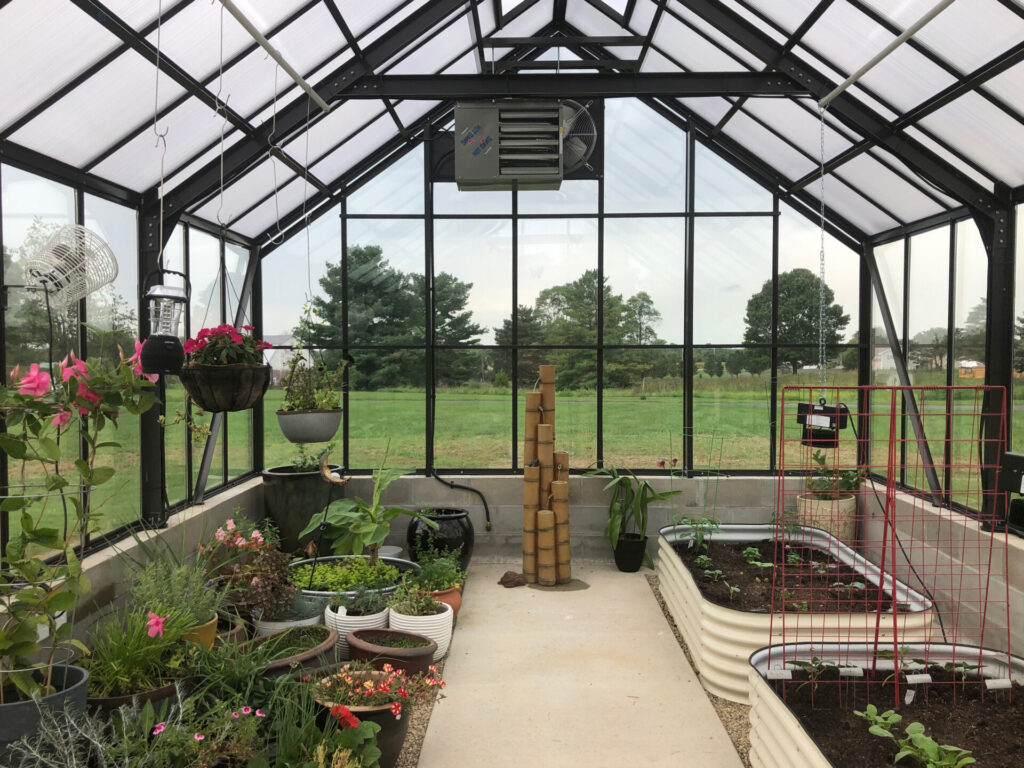
Materials, Engineering, and Long-Term Value Explained
If you’ve started shopping for a greenhouse, you have likely noticed a wide range of prices. Some structures from online-only vendors and big box stores cost only a few hundred dollars. Others represent a much more significant investment.
At a glance, they may appear similar. Four walls. Clear panels. A door.
But what you cannot see in a product photo is what truly drives the difference.
Greenhouse price differences are primarily driven by structural engineering, material quality, glazing performance, wind and snow load ratings, customization, and long-term durability.
Once you understand those factors, the price gap becomes much easier to understand.
Frame Materials: The Foundation of Everything
The frame is the foundation of the structure itself. Of course, every greenhouse also needs a properly built base underneath it. But even the best concrete, gravel, or wood foundation cannot compensate for a weak frame. The structural framework must be engineered to handle wind, snow, seasonal shifts, and years of daily use.
Many mass-produced kits rely on thin aluminum, lightweight steel, or plastic connectors. These structures are typically designed to meet a price point. That often means minimal bracing and limited reinforcement. In mild climates, they may perform adequately, but they are rarely engineered for decades of dependable use.
By contrast, our greenhouse lines are built with longevity in mind.
Cross Country Greenhouses are heirloom-quality structures engineered to last generations. They are designed for strength, expandability, and long-term performance. These are permanent growing structures built to withstand real weather.
Heritage Wood Greenhouses are handcrafted here at the Charley’s Woodshop in Mount Vernon, WA, from hand-selected Western Red Cedar. Western Red Cedar is known for its natural durability, dimensional stability, and resistance to moisture and decay. It performs exceptionally well in outdoor environments exposed to changing temperatures and humidity.
It is important to note that not all cedar is the same. Some wooden greenhouses on the market are labelled simply as “cedar” without identifying the species. When the cedar type is not specified, it may indicate a lower-grade or less durable variety. In a structure exposed to year-round moisture, snow, and sun, the species matters.
Even our most accessible line, Winter Gardenz Greenhouses, is thoughtfully engineered. Entry-level does not mean disposable. It means a smaller footprint and streamlined configuration, not compromised integrity.
When stronger materials are selected from the start, the entire greenhouse performs better for years to come.
Glazing: Light In, Weather Out
The glazing, or the material that allows light into your greenhouse, plays a major role in both price and long-term performance.
Lower-priced kits often use thinner panels with minimal insulation value and limited UV stabilization. Some budget polycarbonate panels may not include a durable UV protective coating. Over time, this can lead to discoloration, brittleness, or reduced light clarity. Thinner panels also allow more heat to escape, which impacts plant health, heating costs, and overall growing consistency.
Higher-quality greenhouses use glazing materials engineered for durability and performance. Insulated double-wall or multi-wall polycarbonate helps retain heat while maintaining strong light transmission. These panels are typically manufactured with long-term UV protection designed to preserve clarity and structural integrity.
For growers who prefer glass, tempered safety glass offers strength and clarity beyond standard window glass. Single-pane glass provides a traditional look with excellent light transmission, while double-pane configurations improve insulation and temperature stability. The glazing choice affects not only appearance, but also energy efficiency, structural performance, and year-round usability.
At Charley’s Greenhouse & Garden Supply, all three of our greenhouse lines, Cross Country Greenhouses, Heritage Wood Greenhouses, and Winter Gardenz Greenhouses, offer high-quality glazing options designed for real growing conditions. We can help you select the right glazing for your climate, growing goals, and level of insulation needed.
Glazing is not simply a visual detail. It directly influences how well your greenhouse performs through seasonal changes, how efficiently it retains heat, and how consistently your plants thrive.
Engineering You Can Measure: Wind and Snow Ratings
One of the clearest differences between a long-lasting greenhouse and a temporary kit is whether it has real wind and snow ratings for real-world weather.
Many inexpensive greenhouse kits do not publish engineered load ratings. That often means they are not designed for significant wind events or heavy snow accumulation.
The greenhouse lines we offer at Charley’s Greenhouse & Garden Supply are engineered with measurable standards. Wind ratings indicate how much gust force a structure can withstand. Snow load ratings measure how much accumulated snow the roof can safely support. Together, these ratings determine whether a greenhouse can safely withstand your local climate.
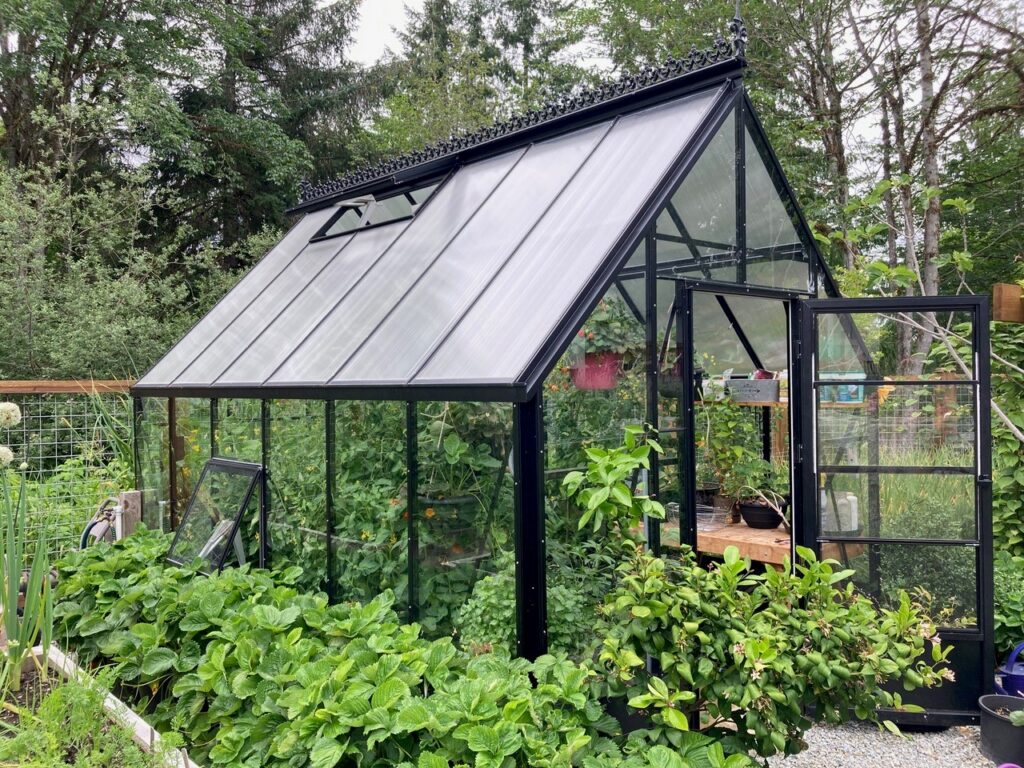
Cross Country Greenhouses
All Cross Country Greenhouses are rated for at least 85 mph wind and 32 pounds per square foot snow load. Optional reinforcement upgrades are available for even greater capacity. These structures are built to handle serious weather and can be customized and expanded as your garden grows with you.
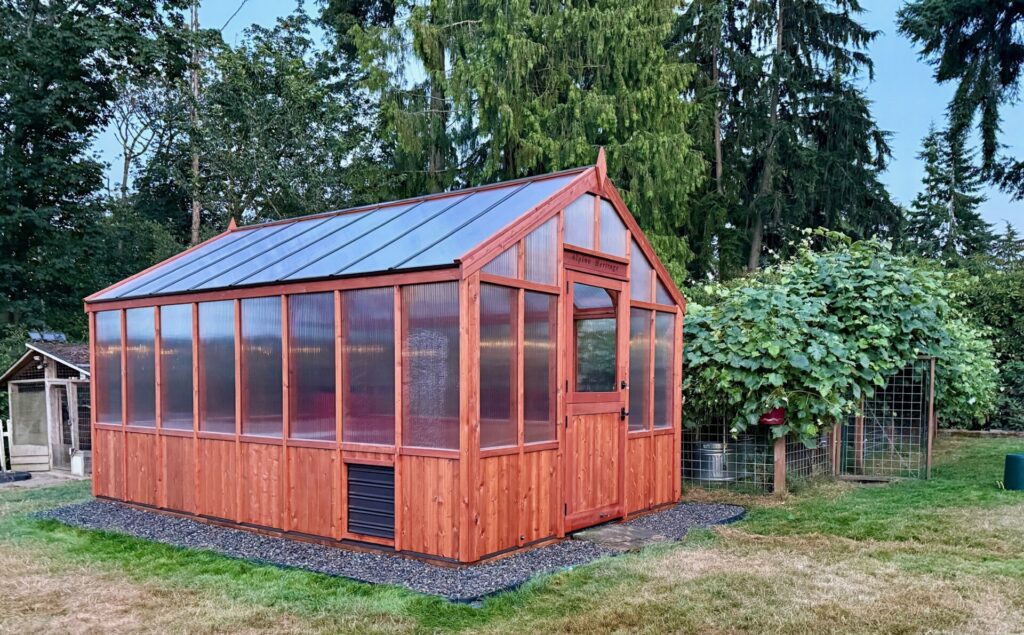
Heritage Wood Greenhouses
Heritage Wood Greenhouses are rated for 75 mph wind and 35 pounds per square foot snow load. The structural integrity of cedar, combined with insulated glazing, creates a greenhouse that performs reliably while offering architectural beauty.
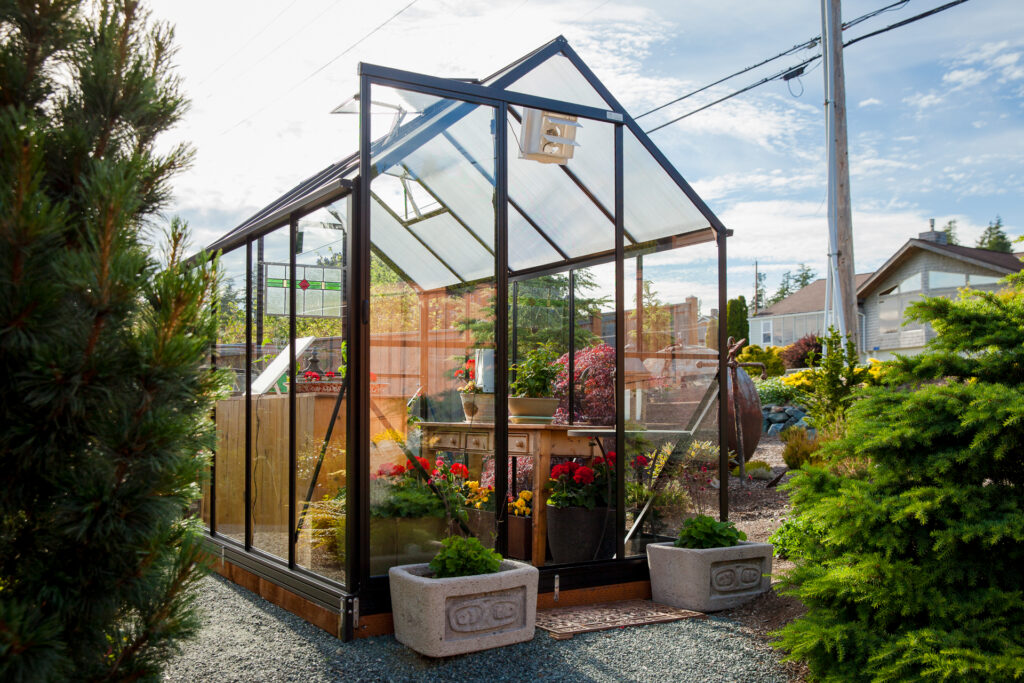
Winter Gardenz Greenhouses
Winter Gardenz Greenhouses are rated for wind gusts up to 93 mph and sustained winds up to 75 mph. These New Zealand-built greenhouses meet high wind zone classifications in NZ, demonstrating meaningful engineering even at the smallest starting size of 6 ft by 8 ft.
When a greenhouse has clear, published ratings, you are looking at engineering rather than guesswork.
Expandability and Customization
Another significant driver of greenhouse cost is flexibility.
Many lower-cost kits are fixed in size and configuration. What you see is what you get. If your needs change or your growing ambitions expand, the only option is replacement.
By contrast, our greenhouse lines are designed with choice in mind.
Cross Country Greenhouses offer the most extensive customization. Size, glazing, doors, vents, and accessories can be selected to match your climate and goals. Many models can even be expanded later, allowing your greenhouse to grow alongside your gardening plans.
Heritage Wood Greenhouses reflect a different kind of customization. Because each structure is handcrafted, thoughtful details can be tailored to the homeowner. The Alpine Insulated model, for example, comes standard with a customizable sign installed above the door, a personalized touch made possible by hand-built construction. It can also be configured with or without a pony wall, depending on your design preference and site needs. For growers who prefer to remain off-grid, the exhaust system can be upgraded to a solar-powered fan.
Even Winter Gardenz Greenhouses provides meaningful choices. While streamlined for accessibility, these models still allow you to select your glazing option, choosing between glass and twinwall polycarbonate based on your climate and growing goals.
In fact, all the greenhouse lines at Charley’s Greenhouse & Garden Supply let you choose your preferred glazing, whether you prioritize glass clarity or the insulation benefits of twinwall or multiwall polycarbonate.
When compared to mass production, customization and flexibility add cost. It also ensures that your greenhouse works for your space, your climate, and your long-term plans rather than forcing you into a one-size-fits-all solution.
Longevity Changes the Equation
A greenhouse is not just a seasonal purchase. It becomes part of your property and part of your daily rhythm.
Over the years, we have worked with many customers who come to us after their first greenhouse did not last as long as they expected. Some experienced storm damage. Others found that panels loosened or clouded more quickly than anticipated. Many simply outgrew their original structure within a few seasons.
In nearly every case, they tell us the same thing. If they had understood the structural and engineering differences earlier, they would have invested differently from the start.
A well-engineered greenhouse is designed to last decades. It is built to withstand real weather, protect your plants, and adapt as your growing ambitions expand. Instead of replacing a structure every few years, you are investing in something designed to support long-term growth.
There is also a broader consideration. A thoughtfully built greenhouse, especially one with architectural presence and durable materials, often feels less like a temporary garden accessory and more like a permanent improvement to the property. In certain markets, high-quality outdoor structures can enhance a home’s overall appeal, particularly for buyers interested in gardening, sustainability, or food production.
When you factor in replacement costs, lost growing time, and the effort of starting over, the long-term value of a stronger structure becomes much clearer. For many growers, the peace of mind is just as important as the performance.
What You Are Really Paying For
Greenhouse price differences reflect material strength, glazing performance, structural engineering, expandability, customization, craftsmanship, and long-term durability.
Whether you choose the heirloom strength of Cross Country Greenhouses, the handcrafted beauty and insulation of Heritage Wood Greenhouses, or the accessible yet engineered performance of Winter Gardenz Greenhouses, you are investing in a structure designed to support your growing goals for many years to come.
Once you understand what truly drives greenhouse price differences, the value becomes clear.
Ready to Take the Next Step?
If you are thinking seriously about investing in a greenhouse, a little clarity goes a long way.
Our Greenhouse Buyer’s Checklist walks you through the key decisions, from structure and glazing to climate considerations, so you can move forward with confidence and choose a greenhouse that truly fits your space and goals.
Take the Greenhouse Buyer’s Checklist quiz and start planning with confidence.