Why Greenhouse Systems Need to Work Together (Not Separately)
When people first start planning a greenhouse, it is easy to think in terms of individual pieces.
A heater for winter. A fan for summer. Maybe shade cloth when things start to feel too warm.
Each of those decisions makes sense on its own. But a greenhouse does not operate in pieces. It works as a system.
Temperature, airflow, sunlight, and moisture are constantly interacting. When one is out of balance, the others have to compensate. That is when you start to see issues like overheating, condensation, plant stress, or disease.
Understanding how these systems work together is often the difference between a greenhouse that feels frustrating and one that feels easy to grow in.
Quick Answer: How do greenhouse systems work together?
Greenhouse systems work together by balancing temperature, airflow, humidity, and light. Ventilation removes heat and moisture, circulation fans keep air moving, shade reduces heat gain, and watering affects humidity. When these systems are aligned, the greenhouse environment stays stable and easier to manage.
What Are You Trying to Control in a Greenhouse? (Temperature, Humidity, Airflow & Light)
At its core, a greenhouse is about creating consistency.
Plants do not respond to a single condition. They respond to the environment as a whole. That means temperature, humidity, airflow, and light are always working together, whether you intend them to or not.
What controls the greenhouse environment?
A greenhouse environment is controlled by managing four key factors:
- Temperature
- Humidity
- Airflow
- Light exposure
When these stay in balance, plants grow steadily. When they drift apart, problems tend to show up quickly.
Warm air that is not moving can trap moisture and lead to disease. Bright sunlight without airflow can push temperatures higher than expected. Even watering can shift the balance by adding humidity into the air.
The goal is not perfection. It is stability.
How Greenhouse Ventilation Works (And Why It Matters)
Ventilation is where greenhouse climate control begins.
It is responsible for exchanging indoor air with outdoor air, which helps regulate both temperature and humidity throughout the day.
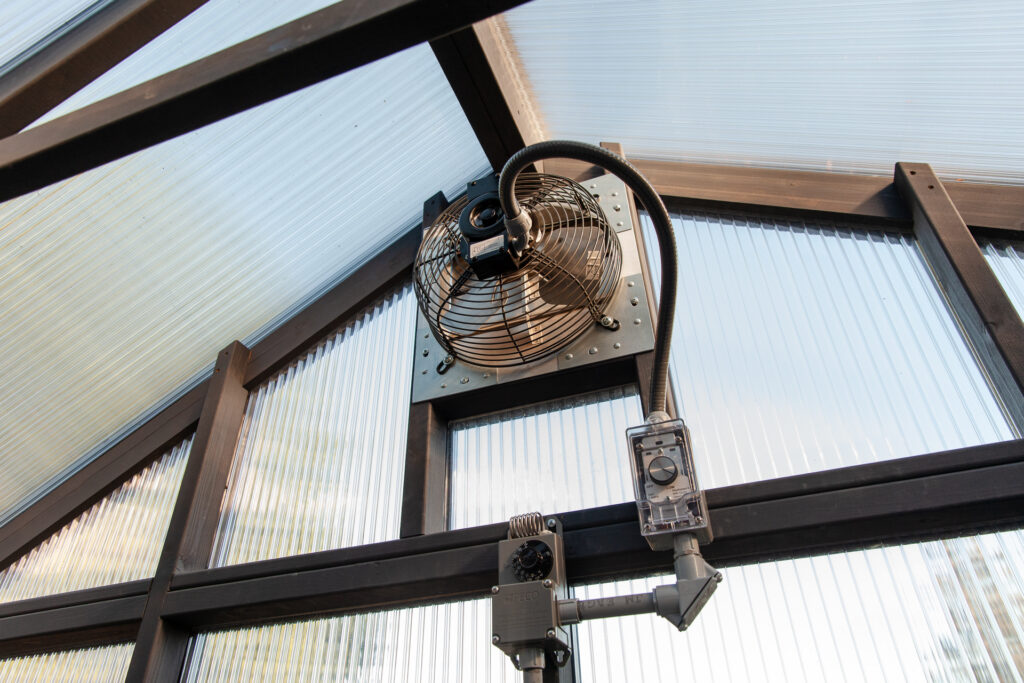
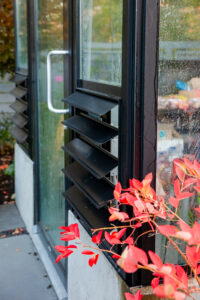
Most greenhouses rely on a combination of passive and active ventilation. Roof vents and side vents allow heat to escape naturally, while exhaust fans and intake shutters help move air more consistently when conditions demand it.
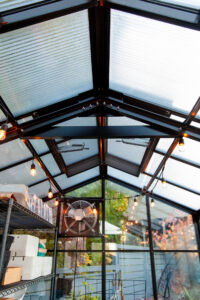
What does ventilation do in a greenhouse?
Ventilation controls greenhouse conditions by:
- Removing built-up heat
- Bringing in cooler outside air
- Reducing excess humidity
- Preventing stagnant air from lingering
Without enough ventilation, heat and moisture build up faster than most people expect, and every other system has to work harder to compensate. At Charley’s Greenhouse and Garden Supply, we have found that ventilation is often the most underestimated part of a greenhouse setup, especially for first-time growers.

Do You Need Fans Inside a Greenhouse? (Air Circulation Explained)
Ventilation brings fresh air into the greenhouse. Circulation keeps that air moving once it is inside.
It sounds subtle, but it’s one of the most important differences to understand.
Even in a well-ventilated greenhouse, air does not automatically distribute itself evenly. Warm air tends to rise, cooler air settles lower, and pockets of still, damp air can form in corners or behind dense plant growth.
What do greenhouse circulation fans do?
Circulation fans improve greenhouse conditions by:
- Keeping temperatures consistent throughout the space
- Reducing condensation on plants and glazing
- Lowering the risk of mold and mildew
- Helping plants grow stronger with gentle airflow
Without circulation, it is common to see uneven growth or localized issues that are hard to explain. In many cases, the root cause is simply that the air is not moving enough, something our greenhouse experts at Charley’s Greenhouse often see show up as uneven plant growth or unexpected disease pressure.
How Greenhouse Heating Works (And Why Airflow Still Matters)
Heating allows you to maintain minimum temperatures and grow beyond your local outdoor season. It is what makes winter growing or early spring starts possible.
At the same time, heating introduces its own challenges.
Warm air holds more moisture, and without proper airflow, that moisture can collect on plants, framing, and glazing. This is where condensation and disease often begin.
Why isn’t heating alone enough in a greenhouse?
Heating needs to be paired with airflow because:
- Warm air increases humidity levels
- Moisture can condense on cooler surfaces
- Heat can become uneven without circulation
A balanced setup uses heating to maintain temperature, circulation to distribute that warmth, and ventilation to remove excess moisture when needed.
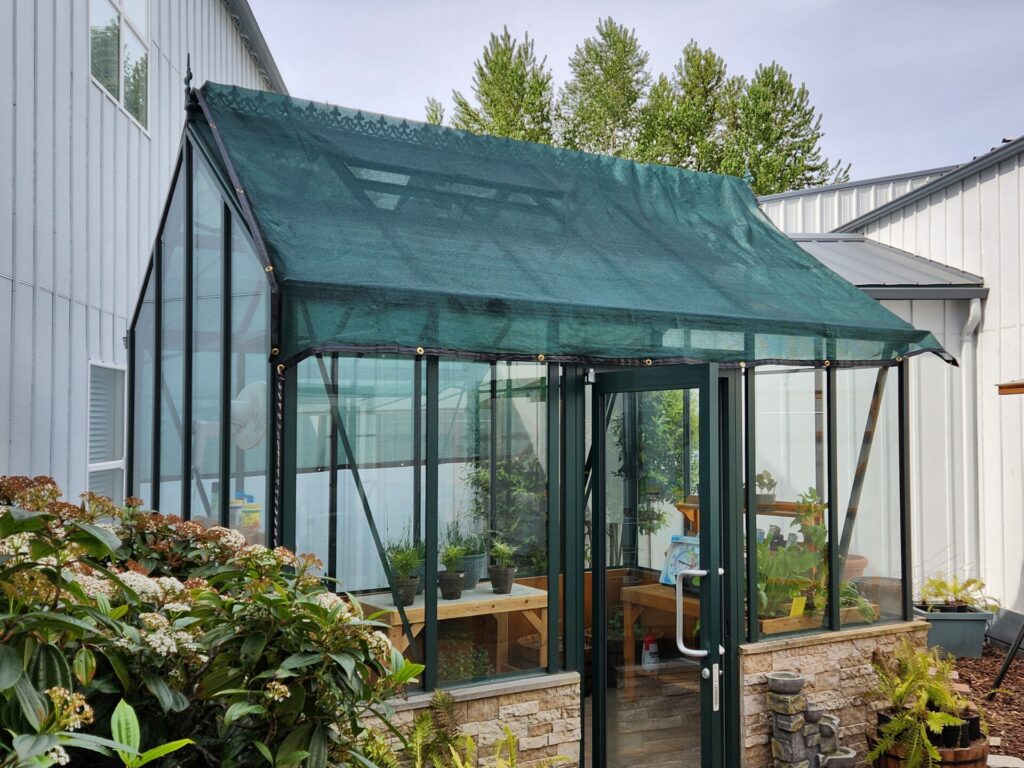
What Does Shade Cloth Do in a Greenhouse? (Temperature & Light Control)
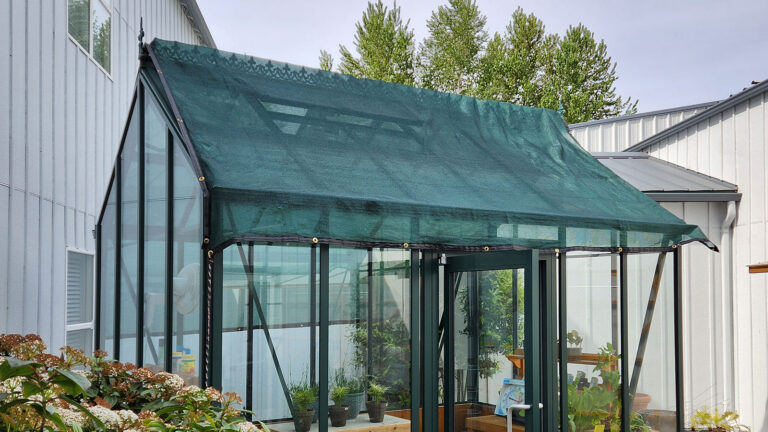
Sunlight is essential for plant growth, but it is also the primary source of heat inside a greenhouse.
On a bright day, temperatures can rise quickly, even when outside conditions feel mild. Once that heat builds up, your ventilation system has to work harder to bring things back down.
Shade cloth helps manage this by reducing the intensity of incoming sunlight before it becomes excess heat.
How does shade cloth help a greenhouse?
Shade cloth improves greenhouse conditions by:
- Reducing solar heat gain
- Lowering peak daytime temperatures
- Protecting plants from leaf scorch
By controlling heat at the source, shade makes the entire system more efficient and easier to manage.
How Watering Affects Greenhouse Humidity and Temperature
Watering is often thought of as a plant care task, but it also plays a direct role in climate control.
Every time you water, moisture enters the air through evaporation. Depending on how often and how heavily you water, this can significantly raise humidity levels inside the greenhouse.
How does watering affect greenhouse humidity?
Watering increases humidity because:
- Moisture evaporates into the air
- Damp soil and surfaces release water over time
- Misting adds fine droplets directly into the air
Misting systems take this a step further. When used intentionally, they can be an effective way to cool a greenhouse during hot weather through evaporative cooling.
As water evaporates, it absorbs heat from the surrounding air, helping bring temperatures down. This can make a noticeable difference on hot summer days, especially when paired with strong airflow.
At the same time, the added moisture needs to be managed carefully. Without proper ventilation and air circulation, humidity can build up quickly and create ideal conditions for mold, mildew, and plant disease.
The key is balance. Misting and watering can help cool and support plant health, but they work best when ventilation and circulation are keeping that moisture moving and under control.
How Greenhouse Systems Work Together
Each system has its own role, but the real impact comes from how they work together.
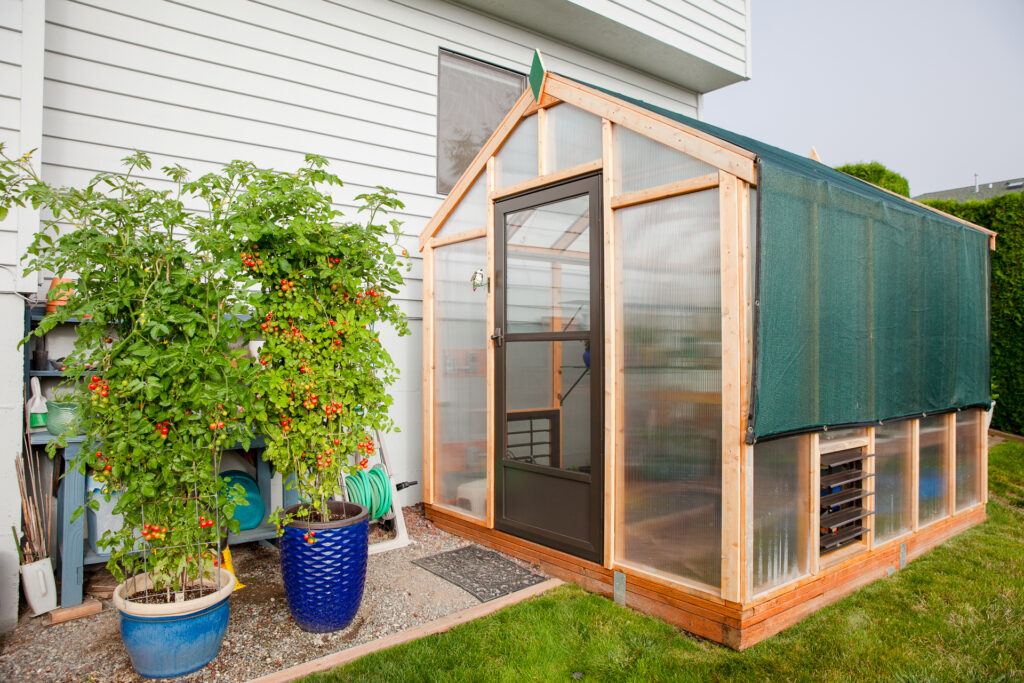
On a hot summer day, sunlight drives temperatures up quickly. After all, it’s called the greenhouse effect for a reason. Shade cloth reduces how much heat enters in the first place. Ventilation removes the hot air that builds up, while circulation fans keep temperatures even throughout the space. If needed, misting can provide additional cooling.
On a cool, damp morning, the priorities shift. Heating brings temperatures up to a safe level. Circulation fans distribute that warmth so there are no cold pockets. Ventilation helps release excess humidity, preventing condensation from settling on plants.
When something is missing, the imbalance becomes obvious. A greenhouse without shade can overheat even with strong ventilation. A heated greenhouse without airflow can quickly become damp and prone to disease. Watering without ventilation can push humidity too high and keep it there.
Most greenhouse challenges are not caused by one system failing. They come from systems not working together.
Common Greenhouse Mistakes (And How to Avoid Them)
It is natural to build a greenhouse setup step by step. Most people add equipment as new challenges appear.
The issue is that each addition changes the overall environment.
Adding a heater affects humidity. Adding shade changes how much ventilation you need. Increasing watering changes airflow requirements.
Thinking about your greenhouse as a complete system, even if you are building it gradually, helps you make better decisions along the way.
Where to Start When Setting Up Greenhouse Systems
If you are starting from scratch, it helps to think in terms of priority rather than trying to solve everything at once.
Ventilation usually comes first because it has the biggest impact on both temperature and humidity. From there, air circulation helps stabilize conditions throughout the space. Shade becomes important depending on your sun exposure, while heating allows you to extend your growing season. Watering and humidity control can then be fine-tuned based on how your greenhouse behaves.
This approach keeps things manageable while still building toward a well-balanced system.
How to Plan Greenhouse Systems for Now and Later
Not every greenhouse needs every system installed on day one. But thinking ahead can make a big difference in how easy your setup is to build and improve over time.
Some systems, especially ventilation, are much easier to get right when they are considered before you purchase your greenhouse. Roof vents, side vents, and exhaust fans are integrated into the structure itself, so it helps to plan for them early rather than trying to retrofit later.
It is also worth thinking ahead during your site prep and foundation stage. If you plan to use powered ventilation like an exhaust fan system, heating, or other automated systems, you may want to run electricity to the greenhouse from the start. The same goes for water access if you are considering irrigation or misting. Keep in mind the importance of air circulation and typically most fans are run by electricity.
Other upgrades are more flexible. Shade cloth and even some watering systems can usually be added later without major changes to the structure.
A helpful way to approach this is in two phases. Start with the systems that will have the biggest immediate impact, then leave room to expand as your growing needs evolve.
When you plan with the full system in mind from the beginning, you can avoid rework and make each upgrade feel like a natural next step instead of a retrofit, which is where Charley’s Greenhouse customers typically see the best long-term results.
When Everything Works Together, Growing Gets Easier
A greenhouse is more than a structure. It is a living environment that responds to small changes in temperature, airflow, light, and moisture.
When those elements are working together, growing becomes more predictable and more enjoyable. That’s when your greenhouse truly begins to work in harmony with you, supporting your success every step of the way.