
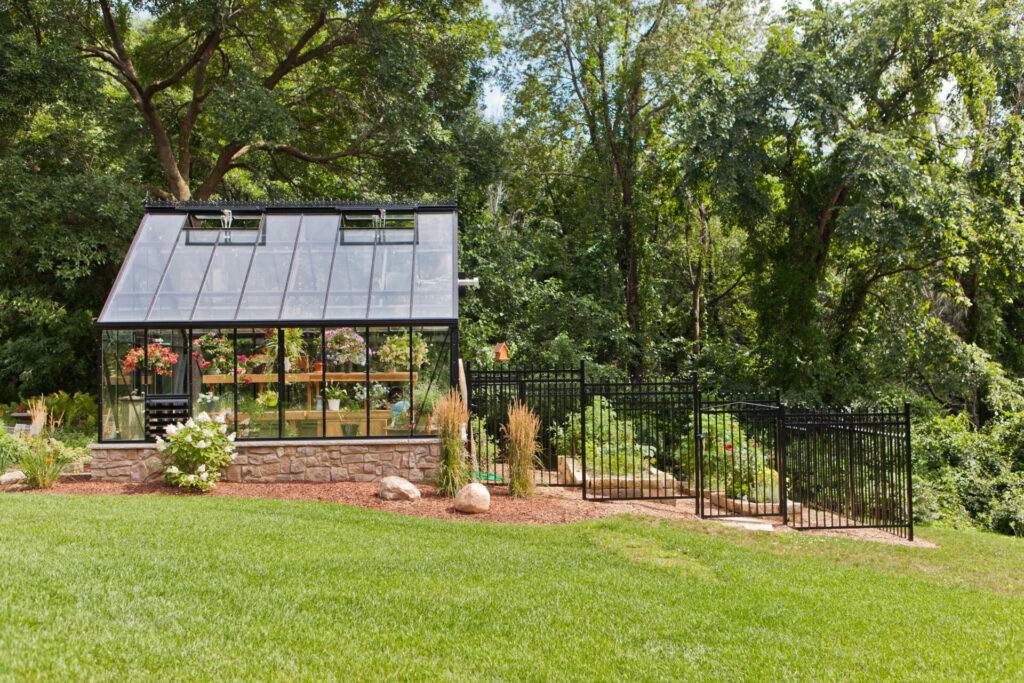
A greenhouse can start as a place to get seedlings going a little earlier in spring. Then come the tomatoes, overwintered plants, propagation projects, citrus trees, and plans for gardening well beyond the usual growing season.
For many hobby gardeners, the greenhouse they thought would be “plenty of space” can quickly become something they wish they had planned differently.
Choosing the right greenhouse kit from the beginning means looking beyond size and appearance. A durable greenhouse should be designed for the weather where you live, provide enough space for the way you want to garden, and support the ventilation, heating, insulation, and other equipment you may want to add over time.
At Charley’s Greenhouse & Garden Supply, we often work with gardeners shopping for their second greenhouse after a cheaply made or entry-level structure turned out to be too small, blew over in severe weather, fell apart, lacked adequate ventilation, or simply couldn’t support the longer growing season they wanted.
This guide explains what makes greenhouse kits durable, how ready-to-ship and custom greenhouse kits compare, and what first-time hobby gardeners should consider when choosing a greenhouse for long-term backyard gardening.
What Makes a Greenhouse Kit Durable?
A durable greenhouse kit combines a strong frame, appropriate glazing, weather-ready engineering, quality components, and a design that can continue serving the gardener as their needs change.
When comparing greenhouse kits, consider:
- Frame construction: Look at the material, structural design, connection points, and warranty rather than judging strength by appearance alone.
- Wind and snow ratings: A greenhouse in Arizona faces very different conditions than one in Maine. Know the weather loads the structure is engineered to withstand and whether upgrades are available.
- Glazing options: Look for choices in glass and multiwall polycarbonate, including upgraded options that provide greater insulation for extended-season growing.
- Ventilation: Roof vents, intake shutters, exhaust fans, and circulation fans can become essential as temperatures climb.
- Insulation: Gardeners who want to extend their season into colder weather should consider the insulating value of the glazing, structure, and the overall greenhouse design.
- Roof design: Consider roof slope and shape, particularly in snowy climates where steeper pitches can help shed snow.
- Foundation and installation: Even a well-engineered greenhouse needs to be properly anchored and installed on an appropriate foundation.
- Replacement parts and serviceability: A greenhouse intended to last for decades should be maintainable. Consider whether components, glazing, hardware, and accessories can be repaired or replaced over time.
- Warranty: A strong structural warranty can provide another indication of how the manufacturer expects the greenhouse to perform over the long term.
Durability is ultimately about more than surviving a storm. A durable greenhouse should continue to function well through years of sun, rain, wind, temperature swings, and everyday gardening.
Why Do Home Gardeners Struggle to Choose Durable Greenhouse Kits?
Home gardeners often struggle to compare greenhouse kits because products that look similar online can differ substantially in structural strength, glazing, ventilation, engineering, and long-term serviceability.
Price and dimensions are easy to compare. Durability is harder.
Two 8-by-10-foot greenhouse kits, for example, may have very different frames, wind ratings, glazing systems, warranties, and options for ventilation or heating. Those differences may not become obvious until the greenhouse encounters its first major windstorm, heavy snowfall, or hot summer.
First-time greenhouse buyers also don’t always know what they will want from the space several years from now.
Someone initially interested in starting vegetable seedlings may eventually want to grow tomatoes into fall, overwinter tender plants, propagate cuttings, or spend time in the greenhouse during winter. Choosing solely for today’s gardening plans can make it easier to outgrow the structure tomorrow.
That is why Charley’s recommends thinking about how you want to garden, when you want to garden, and how your greenhouse needs may change, rather than choosing based on dimensions and price alone.
What Causes Hobby Gardeners to Outgrow Basic Greenhouse Kits?
Hobby gardeners commonly outgrow basic greenhouse kits because of limited space, insufficient ventilation, poor cold-weather performance, lightweight construction, and limited options for adding equipment or customizing the greenhouse.
Sometimes they literally run out of room.
A few seed trays turn into benches. A couple of tomato plants become an entire summer crop. Overwintering a few tender plants becomes a collection. Once you experience the flexibility of growing under cover, finding another use for the greenhouse is rarely difficult.
Physical size isn’t the only reason gardeners move on from their first greenhouse, however.
Common limitations include:
- Not enough room for expanding plant collections
- Lightweight frames or anchoring that aren’t suited to local weather
- Inadequate summer ventilation or cold-weather insulation
- Limited ability to add climate-control equipment
- Layouts that don’t accommodate the way you want to grow
- Few options for replacement parts or future upgrades
Charley’s frequently hears from customers looking for their second greenhouse after discovering one or more of these limitations with their first.
For a first-time buyer, that experience offers a useful lesson: don’t just ask whether a greenhouse meets your needs today. Ask whether it can accommodate the gardener you may become.
Shopping for your first greenhouse?
Charley’s Greenhouse Buyer’s Checklist can help you think through the features, growing goals, and options that matter before you choose
Ready-to-Ship vs. Custom Greenhouse Kits: What’s the Difference?
Ready-to-ship greenhouse kits are designed around popular established sizes, configurations, and specifications, making them a good option for gardeners who want a more streamlined buying process. Custom greenhouse kits offer significantly more control over dimensions, glazing, structural requirements, appearance, features, and accessories.
Neither approach is inherently better for every gardener.
| Consideration | Ready-to-Ship Greenhouse Kits | Custom Greenhouse Kits |
|---|---|---|
| Lead time | Generally shorter | Generally longer because the greenhouse is made to order |
| Sizes | Predetermined sizes | Greater flexibility |
| Design choices | More standardized | Extensive customization |
| Glazing | Model-dependent options | Greater ability to select glazing for specific goals |
| Climate planning | Suitable for many backyard applications | Easier to tailor to demanding climates or growing goals |
| Accessories | Compatible accessories available | Can be planned around a more complete greenhouse system |
| Best for | Gardeners who find an existing configuration that fits their needs | Gardeners with specific site, climate, aesthetic, or growing requirements |
| Investment | Generally more predictable | Varies substantially based on size and selected options |
ConsiderationReady-to-Ship Greenhouse KitsCustom Greenhouse Kits
The important distinction is that ready-to-ship does not mean disposable or entry-level.
For example, Charley’s ready-to-ship Cross Country Greenhouses use the same emphasis on structural quality and long-term durability that makes the Cross Country line a choice for serious home gardeners.
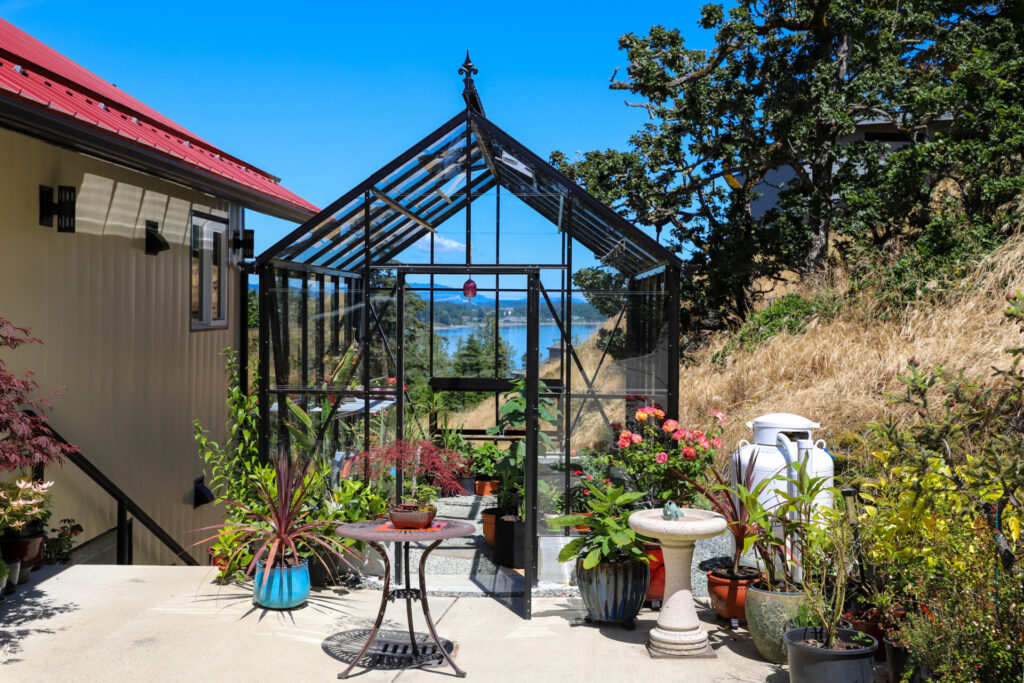
What Greenhouse Kits Ship Quickly Within the United States?
Gardeners looking for a shorter lead time should consider ready-to-ship greenhouse kits, which are produced in predetermined configurations rather than individually designed and manufactured for each order.
Charley’s offers several ready-to-ship Cross Country Greenhouses for customers throughout the United States, including:
- Sunhaven: A practical 8×8 polycarbonate greenhouse designed for gardeners who want the insulating and impact-resistant benefits of multiwall polycarbonate.
- Legacy: An 8×8 glass with twinwall polycarbonate roof for gardeners who prioritize clear views and a classic greenhouse appearance.
- Westgrove: A versatile 8×12 greenhouse with glass walls, steeper roof, and options suited to gardeners looking for a balance of traditional appearance and growing performance.
- Parkside: A beautiful 8×12 distinguished by its steep roofline and architectural greenhouse styling.
Because these models are already configured in specific sizes and specifications, their lead times are generally shorter than made-to-order custom greenhouse kits. “Ready-to-ship,” however, should not be interpreted as same-day or immediate shipping. Availability and lead times can vary.
For gardeners working toward a particular installation date, Charley’s recommends confirming current availability before planning the rest of the project around a shipping timeline.
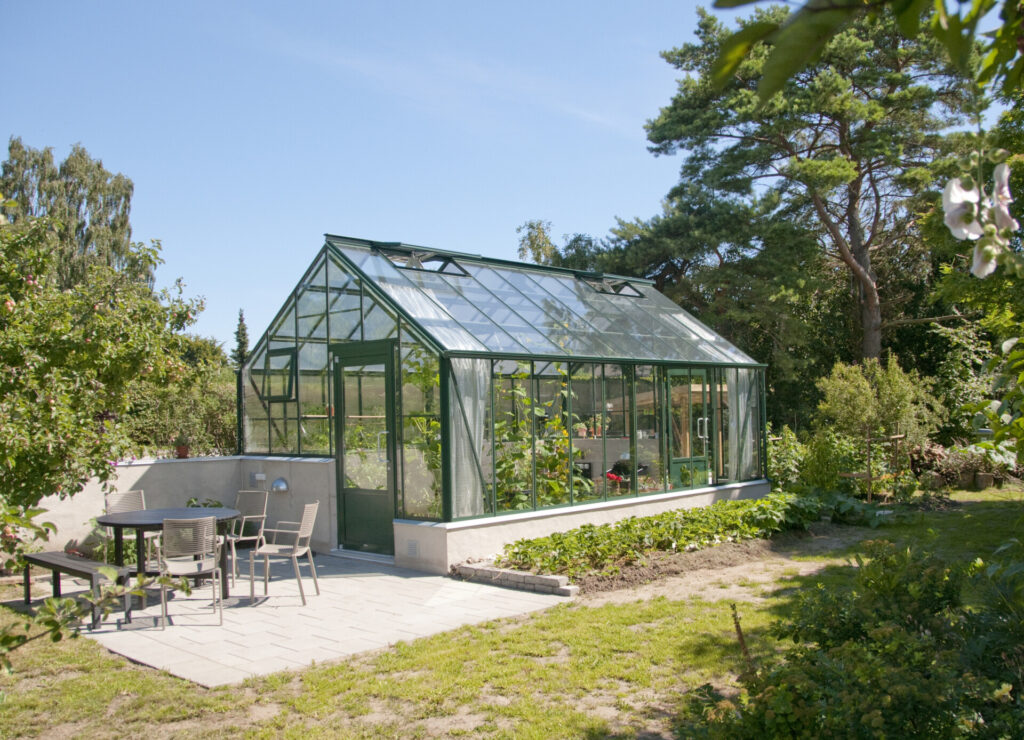
When Is a Custom Greenhouse Kit Worth Considering?
A custom greenhouse kit is worth considering when your site, climate, gardening plans, or aesthetic preferences call for more than a standard configuration can provide.
Customization can become particularly valuable when:
- You need a specific greenhouse size or layout
- Your property experiences significant wind or snow
- You want particular glass or polycarbonate glazing
- You plan to grow through multiple seasons
- You want integrated ventilation or climate-control equipment
- The greenhouse needs to complement your home or landscape
Charley’s made-to-order Cross Country Greenhouses include the Traditional, Cottage, Cape Cod, and Pacific models, providing different rooflines and architectural styles along with extensive opportunities to configure the greenhouse around the site and gardener.
Cross Country Greenhouses are built around long-term structural performance. Standard models are engineered for 85 mph winds and 32 pounds per square foot of snow, with upgrades available for significantly more demanding conditions. Cross Country greenhouse frames and structural components are backed by a lifetime warranty.
For gardeners planning a permanent backyard greenhouse, that ability to match the structure to the site can be just as important as choosing its size.
Are Wood Greenhouse Kits Durable?
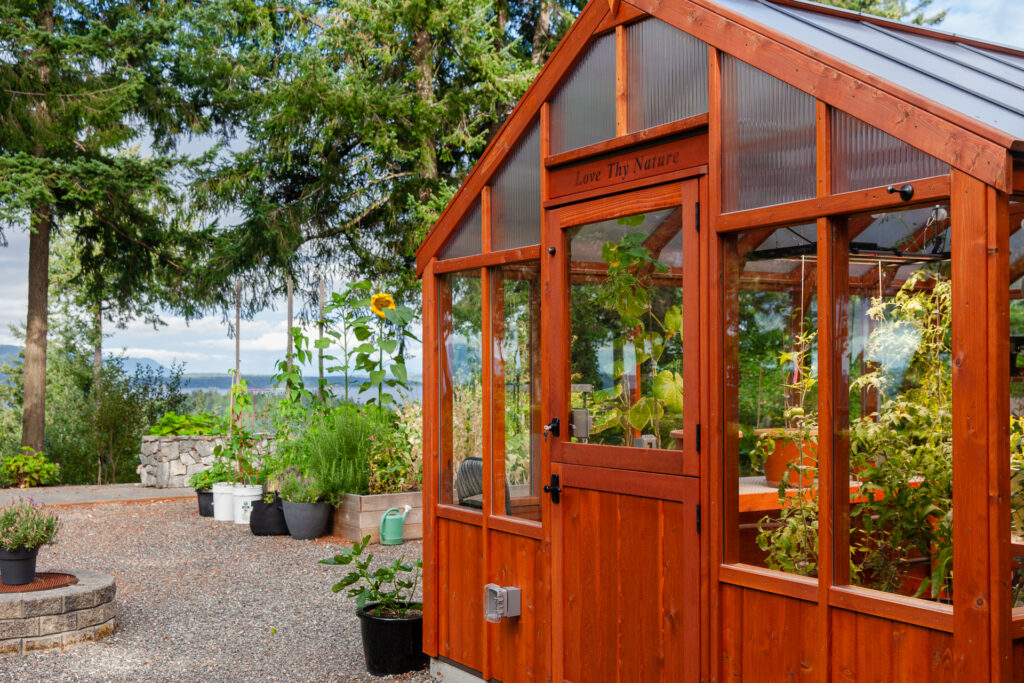
A well-built wood greenhouse can provide decades of service, but the species and quality of the lumber matter.
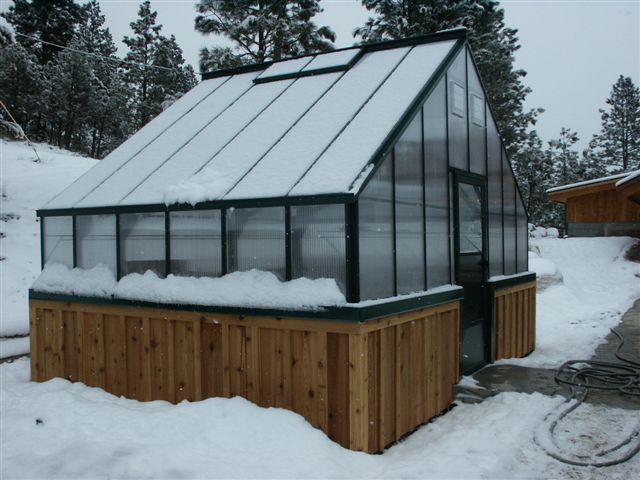
Charley’s Heritage Wood Greenhouses are handcrafted to order in the USA from hand-selected Western Red Cedar, a wood valued for its natural resistance to decay and its ability to perform well in outdoor environments. Heritage Greenhouses are also designed to withstand winds up to 75 mph and snow loads up to 35 pounds per square foot.
Not all wood greenhouse kits use the same grade or species of lumber. Some greenhouses on the market use less durable woods or rely heavily on treatments to help protect material that doesn’t naturally offer the same properties.
For Charley’s Heritage Greenhouses, the lumber is selected for quality before individual components are cut, shaped, and assembled in our Mount Vernon, Washington woodshop.
The result is a greenhouse that combines the warmth and architectural character people want from a wood structure with material selected specifically for long-term outdoor use.
Two Heritage options illustrate how the greenhouse can also be matched to different growing goals:
Woodland Cedar Heritage Greenhouse: A classic cedar greenhouse that combines Western Red Cedar construction with multiwall polycarbonate glazing.
Alpine Insulated Heritage Greenhouse: Designed with beauty and increased insulation in mind, making it especially worth considering for gardeners who want to extend their growing season or maintain a more controlled environment during colder weather.
How Do Custom Greenhouse Kits Support Year-Round Backyard Growing?
Custom greenhouse kits can support year-round backyard growing by allowing the structure, glazing, ventilation, heating, and other climate-control features to be selected around the gardener’s climate and growing goals.
But an important distinction is often overlooked:
A durable greenhouse is not automatically a year-round greenhouse.
A high-quality structure gives you the foundation for year-round growing. The actual growing environment depends on how that greenhouse is configured and operated.
For cold-weather growing, that may mean selecting more insulating multiwall polycarbonate, reducing heat loss, and installing an appropriately sized greenhouse heater.
For summer growing, ventilation becomes critical. Roof vents allow rising hot air to escape, while side vents, intake shutters, exhaust fans, and circulation fans can help manage high temperatures and maintain airflow.
Depending on the location and crops, year-round growing may also require supplemental lighting, shade cloth, automatic vent openers, thermostats, humidistats, or other controls.
This is one of the biggest advantages of planning a greenhouse as a complete growing system rather than purchasing the structure first and thinking about climate control later.
What Glazing Is Best for a Durable Greenhouse Kit?
There is no single best greenhouse glazing for every hobby gardener. The right choice depends on climate, growing season, appearance, insulation needs, and budget.
Tempered safety glass provides excellent light transmission and the classic appearance many homeowners associate with a permanent greenhouse.
Multiwall polycarbonate uses internal air spaces to provide greater insulation than single-pane glazing while remaining lightweight and highly impact resistant. Different thicknesses and wall structures provide different insulation values.
Gardeners interested in extending their season should pay particular attention to glazing. A greenhouse intended primarily for spring seedlings has different requirements from one expected to protect plants through freezing winter temperatures.
When comparing greenhouse kits, ask not only what is the greenhouse glazed with? but also is that glazing appropriate for when and how I want to grow?
How Important Are Wind and Snow Ratings for a Backyard Greenhouse?
Wind and snow ratings are important because greenhouse durability depends on the structure being appropriate for the conditions it will actually experience.
A greenhouse that performs perfectly well in a mild climate may not be the right structure for a property that regularly experiences heavy snow or high winds.
Before buying a greenhouse kit, research local building requirements and typical weather conditions. Pay particular attention to:
- Design wind speeds
- Ground and roof snow loads
- Exposure to prevailing winds
- Falling branches or other site hazards
- Local permitting and building-code requirements
Cross Country Greenhouses, for example, are engineered to withstand 85 mph winds and 32 pounds per square foot of snow in their standard configuration. They can also be upgraded to withstand 140 mph winds and snow loads exceeding 110 pounds per square foot when required by local conditions and building codes.
The greenhouse itself is only part of the equation. Proper site preparation, foundation construction, anchoring, and installation are essential to achieving the intended structural performance.
How Big Should a First Greenhouse Be?
For many hobby gardeners, choosing slightly more greenhouse space than they think they need is worth considering.
Greenhouse space fills surprisingly quickly.
In addition to plants, remember to account for:
- Benches and shelving
- Walking and working space
- Raised or in-ground beds
- Potting areas
- Watering equipment
- Heaters and fans
- Large containers
- Overwintered plants
- Future gardening interests
A greenhouse should still fit the site and budget comfortably, but choosing only enough space for your current plant collection can lead to a cramped greenhouse sooner than expected.
Before settling on dimensions, sketch the interior. Add your benches, beds, pathways, and equipment to scale. Then imagine what happens if your gardening hobby grows over the next five or ten years.
Which Type of Greenhouse Kit Is Right for You?
For first-time hobby gardeners, the best greenhouse kit is one that fits both the property and the long-term gardening plan.
A ready-to-ship greenhouse kit may be the right fit if an existing size and configuration works well for your property and you prefer a more streamlined purchase with a generally shorter lead time.
A custom Cross Country Greenhouse makes sense when you need greater control over size, an irregular footprint, mix and match or upgraded glazing, structural engineering, appearance, or greenhouse equipment.
A Heritage Wood Greenhouse may appeal to gardeners who want the natural character of Western Red Cedar combined with a greenhouse designed as a long-lasting feature of the property.
Whichever direction you choose, durability should be evaluated as a combination of structural strength, weather suitability, glazing, ventilation, serviceability, warranty, and room to grow.
The goal isn’t simply to find a greenhouse that works for your first season. It is to choose one that can continue working for the way you garden years from now.
Plan for the Greenhouse You’ll Want Years From Now
A greenhouse is one of those garden additions that can change how you grow. Spring starts earlier. Fall lasts longer. Plants that once had to come inside may have a dedicated place to overwinter. Before long, the greenhouse can become one of the most-used spaces in the backyard.
That’s why choosing a durable greenhouse kit is about more than finding something that fits today’s garden.
Not sure which features matter most for the way you want to grow? Take Charley’s Greenhouse Buyer’s Checklist, a quick two-minute quiz designed to help you narrow down what to look for in your greenhouse.
Once you have a better idea of what you need, our greenhouse experts can help you compare ready-to-ship kits, custom Cross Country Greenhouses, and Heritage Wood Greenhouses to find the right fit for your site and growing goals.