
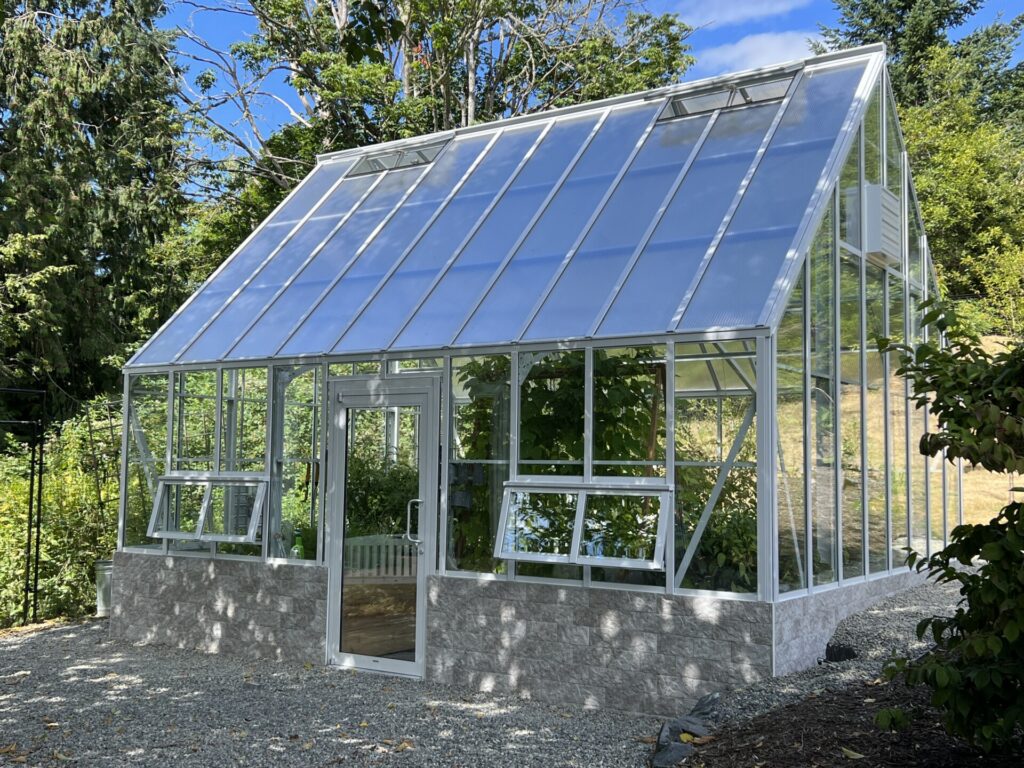
Is glass or polycarbonate better for a greenhouse? Both are excellent choices, but the best material depends on your climate, growing goals, and priorities. Glass provides beautiful, clear views and excellent light transmission, while multiwall polycarbonate offers better insulation than single-pane glass, greater impact resistance, and diffused growing light.
And you don’t necessarily have to choose between them! A greenhouse with glass sidewalls and a polycarbonate roof offers an appealing combination of both, often at a lower cost than an all-glass design.
Let’s take a closer look at how these options compare and which might be the best fit for your greenhouse.
What’s the Difference Between Glass and Polycarbonate Greenhouses?
Greenhouse glazing is the transparent or translucent material covering the walls and roof of your greenhouse. It allows sunlight in while helping create a protected growing environment.
Glass and polycarbonate are two of the most popular greenhouse glazing materials, and both can provide many years of dependable performance.
Here’s how they compare:
| Feature | Tempered Safety Glass | Multiwall Polycarbonate |
|---|---|---|
| Appearance | Classic, clear, and elegant | Softly translucent, with a diffused look |
| Light Transmission | Excellent, with clear views through the panels | Good growing light, spread more evenly |
| Insulation | Single-pane offers less insulation; double-pane improves heat retention | Internal air spaces provide better insulation than single-pane glass |
| Durability | Strong and long-lasting, but can break under impact | Lightweight and highly impact resistant |
| Lifespan | Can last for decades while maintaining its clarity | Can last for decades with proper UV protection and care |
| Maintenance | Smooth surface is easy to clean | Easy to clean, with proper care needed for panel channels and edges |
| Cost | Varies by glass type, thickness, and greenhouse design | Often a cost-effective option, depending on panel specifications |
| Best For | Gardeners who value clear views, natural light, and traditional appearance | Gardeners who prioritize insulation, impact resistance, and diffused light |
Both are excellent choices. The biggest differences come down to how they manage light and heat, how they look, and the growing conditions you want to create.
Do Glass and Polycarbonate Come in Different Types?
Yes! Both glass and polycarbonate greenhouse glazing come in different thicknesses and configurations, each with its own advantages.
Glass options include single-pane tempered safety glass and insulated double-pane glass. Multiwall polycarbonate is available in several thicknesses and structures, including twinwall, triple-wall, fivewall, and 5X-Wall panels. These differences affect insulation, light transmission, and cost.
For example, here are some glazing specifications from our Cross Country Greenhouse options:
| Glazing Type | Approx. Light Transmission | Insulating R-Value |
|---|---|---|
| 3mm Single-Pane Tempered Glass | 95% | 0.96 |
| 6mm Twinwall Polycarbonate | 82% | 1.62 |
| 16mm Insulated Double Glass | 90% | 2.1 |
| 16mm Fivewall Polycarbonate | 62% | 3.0 |
A higher R-value means greater resistance to heat loss, while higher light transmission means more sunlight passes through the glazing. Even panels of the same thickness can perform differently depending on their internal structure.
As you can see, there’s quite a range of performance within each material category.
Want to explore the options in more detail? Read our Guide to Choosing the Best Greenhouse Glazing for Your Climate for a closer look at glazing specifications and recommendations for different growing conditions.
Shopping for your first greenhouse?
Charley’s Greenhouse Buyer’s Checklist can help you think through the features, growing goals, and options that matter before you choose
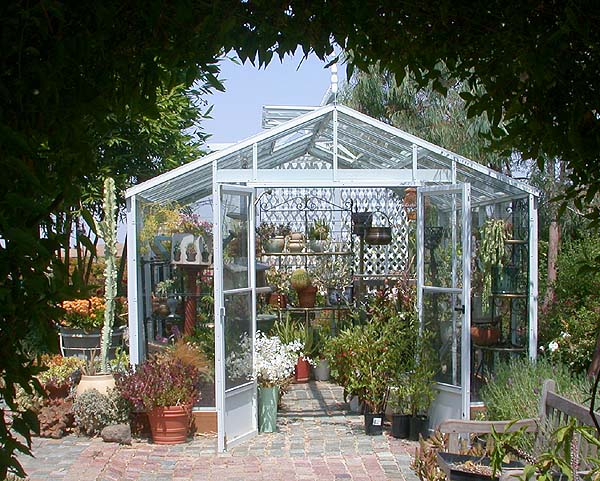
What Are the Benefits of a Glass Greenhouse?
There’s a reason glass greenhouses have been popular with gardeners for generations. They’re beautiful, functional, and built to be enjoyed for years to come.
Beautiful, Clear Views
One of the biggest advantages of glass is its appearance. Clear glass gives a greenhouse that timeless, traditional look while allowing you to see your plants from outside and enjoy unobstructed views of your garden from within.
For gardeners who want their greenhouse to be as much a part of their outdoor living space as their growing space, glass is an especially appealing choice.
Excellent Natural Light
Glass allows a high percentage of available sunlight to enter your greenhouse. For example, the 3mm single-pane tempered safety glass offered in many of our Cross Country Greenhouses provides approximately 95% light transmission.
This can be particularly valuable during shorter winter days or in locations where sunlight is limited.
Long-Lasting Durability
Quality glass can last for decades without yellowing or losing its clarity from UV exposure.
At Charley’s, our glass greenhouse options use tempered safety glass, which is stronger than ordinary annealed glass and designed to break into small, granular pieces if damaged.
While glass isn’t impact-proof, it’s a durable, dependable material when properly installed in a greenhouse designed for your local conditions.
Options for Better Insulation
Single-pane glass provides less insulation than multiwall polycarbonate, but glass isn’t limited to single-pane construction.
Double-pane insulated glass is another option for gardeners who want the clarity and beauty of glass with improved heat retention.
What should you consider? Glass is heavier than polycarbonate and can be more expensive depending on the glazing and greenhouse design. Single-pane glass also allows more heat to escape, so supplemental heating may be needed for winter growing.
For many gardeners, though, its beauty, longevity, and excellent light transmission make glass well worth considering.
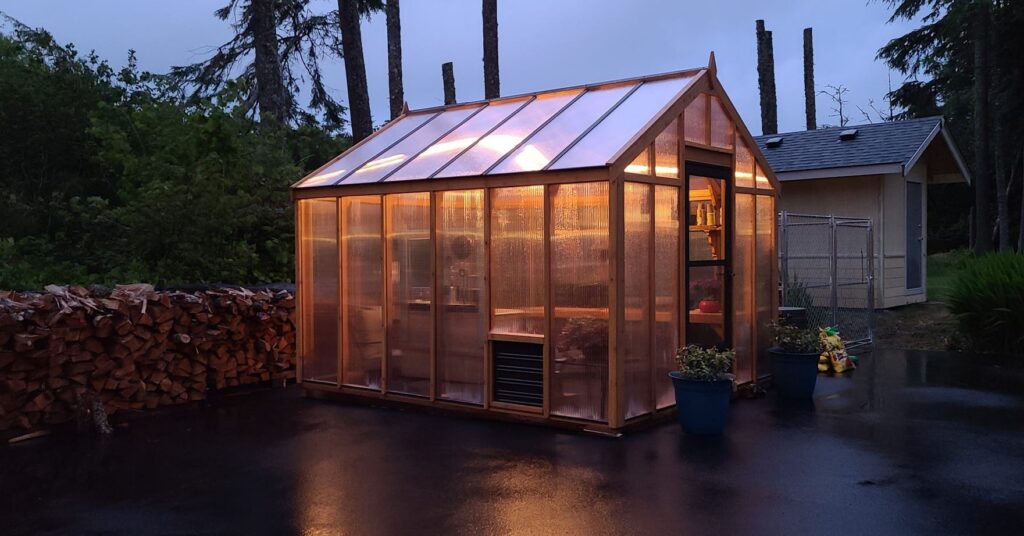
What Are the Benefits of a Polycarbonate Greenhouse?
Multiwall polycarbonate is another excellent greenhouse glazing material, particularly for gardeners looking for a balance of insulation, durability, and growing performance.
Unlike solid glass, multiwall polycarbonate contains internal air spaces that help slow heat loss.
Better Insulation Than Single-Pane Glass
One of polycarbonate’s biggest advantages is its insulating ability.
For example, the 6mm twinwall polycarbonate offered in our Cross Country Greenhouses has an R-value of approximately 1.62, compared with 0.96 for our standard 3mm single-pane glass. Based on these R-values, the 6mm twinwall polycarbonate provides approximately 69% more resistance to heat transfer than the single-pane glass. Actual greenhouse heating needs depend on the entire structure, outdoor temperatures, and growing conditions.
This makes multiwall polycarbonate particularly useful for gardeners who want to extend their growing season or heat their greenhouse during colder months.
Thicker multiwall panels can provide even greater insulation, although the exact performance depends on their internal structure.
Soft, Diffused Growing Light
Polycarbonate allows sunlight to pass through while scattering it more evenly throughout the greenhouse.
This diffused light can help reduce harsh shadows and distribute sunlight across more of your plants, including leaves that might otherwise be shaded.
It’s especially useful for seedlings, leafy greens, and other plants that benefit from more evenly distributed light.
Excellent Impact Resistance
Polycarbonate is lightweight, flexible, and highly resistant to impact. It’s a practical option for greenhouses in areas where hail or falling debris may be a concern.
While no greenhouse glazing is completely indestructible, quality polycarbonate is much less likely to break from impact than glass.
Lightweight and Versatile
Polycarbonate weighs considerably less than glass, making panels easier to handle during assembly. It’s available in different thicknesses and configurations, allowing gardeners to choose the right balance of insulation and light transmission.
What should you consider? Polycarbonate doesn’t provide the same crystal-clear views as glass. Its translucent appearance is appealing to many gardeners, but others prefer the traditional look of clear glass.
Polycarbonate also requires appropriate UV protection, installation, and maintenance to achieve its expected lifespan. Multiwall panel channels need to be properly sealed and drained to help prevent moisture and debris buildup.
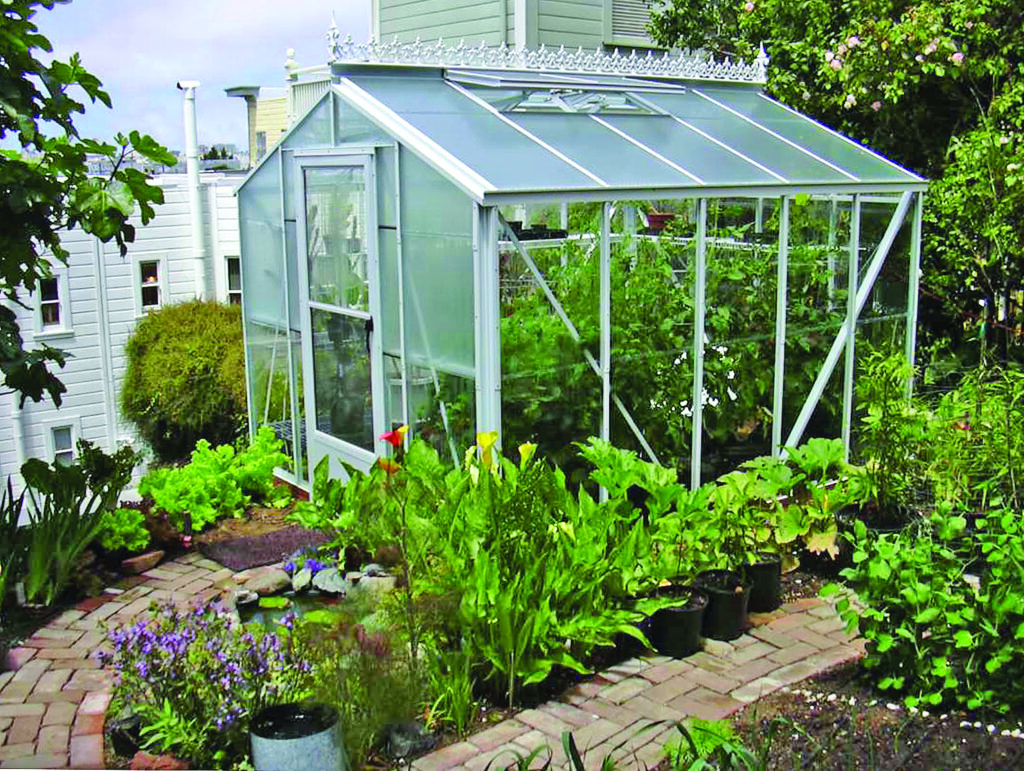
Can You Combine Glass and Polycarbonate in One Greenhouse?
Absolutely! A greenhouse with glass sidewalls and a multiwall polycarbonate roof is one of the most appealing ways to combine beauty, growing performance, and value.
This mixed-glazing design gives you the clear views and classic appearance of a glass greenhouse while taking advantage of polycarbonate’s insulation and light-diffusing properties overhead.
It’s an option we particularly like at Charley’s, and one that’s worth considering before deciding on an entirely glass or entirely polycarbonate greenhouse.
Why Choose Glass Sidewalls with a Polycarbonate Roof?
You get the beautiful appearance of glass.
With clear glass sidewalls, you can enjoy views of your plants and garden without the translucent appearance of polycarbonate at eye level. Your greenhouse maintains the bright, traditional look that makes glass so popular.
The roof provides diffused sunlight.
A polycarbonate roof scatters incoming sunlight, helping distribute light more evenly and reducing harsh overhead glare. This can be especially beneficial during bright, sunny weather.
You gain insulation where it can be particularly useful.
A multiwall polycarbonate roof helps reduce heat loss through the roof compared with single-pane glass. Since the roof makes up a substantial portion of a greenhouse’s exterior surface, improving its insulation can make a meaningful difference.
Of course, the overall insulation of your greenhouse also depends on the sidewalls, ventilation, seals, and other construction details.
It can be a more affordable alternative to all-glass glazing.
Depending on the greenhouse model and glazing specifications, combining glass sidewalls with a polycarbonate roof can cost less than choosing glass throughout, while still providing much of the appearance gardeners love about glass.
It’s a practical balance for many growing situations.
Mixed glazing can be a great fit for backyard gardeners who want a greenhouse that looks beautiful in the garden, provides excellent growing light, and offers some of the insulation benefits of polycarbonate.
Which Greenhouses Offer Mixed Glazing?
At Charley’s Greenhouse & Garden Supply, we offer several greenhouse styles that combine the beauty of glass sidewalls with the practical benefits of a polycarbonate roof.
Our Cross Country Greenhouses include ready-to-ship models with mixed glazing, like the 8’×8′ Legacy Greenhouse, featuring 3mm tempered safety glass sidewalls and a 6mm twinwall polycarbonate roof. Many of our made-to-order Cross Country models also offer customizable glazing combinations.
Our Alpine Insulated Heritage Greenhouse features an insulated 16mm Super 5X-Wall polycarbonate roof, with the option to upgrade the sidewalls to insulated double-pane glass for beautiful views and excellent heat retention.
Our Winter Gardenz Greenhouses are also available with mixed glazing, offering another option for gardeners who want to combine clear glass with the benefits of polycarbonate.
Whether you’re looking for a traditional glass greenhouse appearance, better insulation, or a balance of both, our team can help you explore the glazing options available for your space and growing needs.
Is Glass or Polycarbonate Better for a Greenhouse in Winter?
Multiwall polycarbonate generally provides better insulation than single-pane glass, making it a popular choice for greenhouses used during colder months. However, insulated double-pane glass can also be an excellent option for winter growing.
The best choice depends on your local temperatures, the plants you want to grow, and whether you plan to heat your greenhouse.
If you’re growing cold-tolerant greens or simply extending your season, you may have different insulation needs than someone maintaining tropical plants through freezing winter temperatures.
For more specific climate recommendations, see our Greenhouse Glazing Guide for Different Climates.
Which Greenhouse Glazing Is Best for Growing Plants?
Both glass and polycarbonate provide the sunlight plants need to grow. Glass offers high light transmission, making it especially appealing in locations with limited sunlight. Polycarbonate diffuses light, helping it reach more of the plant canopy while reducing harsh shadows.
Mixed glazing offers a balance of clear glass sidewalls and diffused overhead light.
Whichever you choose, remember that proper ventilation, shade, heating, and humidity management are also important for maintaining healthy growing conditions.
Which Is More Durable: Glass or Polycarbonate?
Both materials can provide many years of reliable use, but they have different strengths.
Tempered safety glass offers excellent long-term clarity and a hard, scratch-resistant surface, although it can break under sufficient impact.
Polycarbonate is more impact resistant and less likely to break if struck by hail or falling objects. Quality UV-protected panels can also provide decades of service when properly installed and maintained.
For either material, choose a greenhouse with a frame and glazing system designed for your area’s wind and snow loads. Glazing alone doesn’t determine how well a greenhouse will stand up to severe weather.
Is Glass or Polycarbonate Easier to Maintain?
Both materials are relatively easy to maintain with routine care.
Glass has a smooth, hard surface that’s straightforward to wash, while polycarbonate can be cleaned with mild soap, water, and a soft cloth or sponge. Avoid abrasive cleaners that could scratch polycarbonate or damage its protective coating.
For multiwall polycarbonate, proper installation of panel tapes, end caps, and drainage details is especially important to help keep the internal channels clean.
Both materials benefit from periodic inspections of seals and glazing attachments.
So, Which Is Better: Glass, Polycarbonate, or Both?
There’s no single glazing material that’s best for every greenhouse. It comes down to what matters most to you.
- Choose glass if you love a traditional greenhouse appearance, want clear views of your garden, and value excellent light transmission and lasting clarity.
- Choose multiwall polycarbonate if insulation, impact resistance, and softly diffused growing light are your top priorities.
- Choose mixed glazing if you want the beauty and visibility of glass sidewalls with the practical benefits of a polycarbonate roof. It’s a particularly appealing balance of appearance, performance, and value.
Whichever option you prefer, choosing a quality greenhouse designed for your climate and growing needs is just as important as selecting the glazing itself.
Find the Right Greenhouse for Your Garden
At Charley’s Greenhouse & Garden Supply, we believe choosing a greenhouse should be an enjoyable process. With over 50 years of greenhouse and gardening experience, our team is here to help you explore your options and find the right fit for your space, climate, and budget.
Our Cross Country Greenhouses are available in a variety of styles, sizes, and glazing configurations, including glass, polycarbonate, and combinations of both.
Want to see how your options compare? Try our Design Your Own Cross Country Greenhouse tool to explore configurations and get an instant ballpark price, without needing to request a quote first.
Or, if you’re still working through the basics, our Greenhouse Buyer’s Checklist is a great place to start.
And if you’d like to talk through the options, our friendly greenhouse team is always happy to help. Call us at 800-322-4707 or email info@charleysgreenhouses.com.