
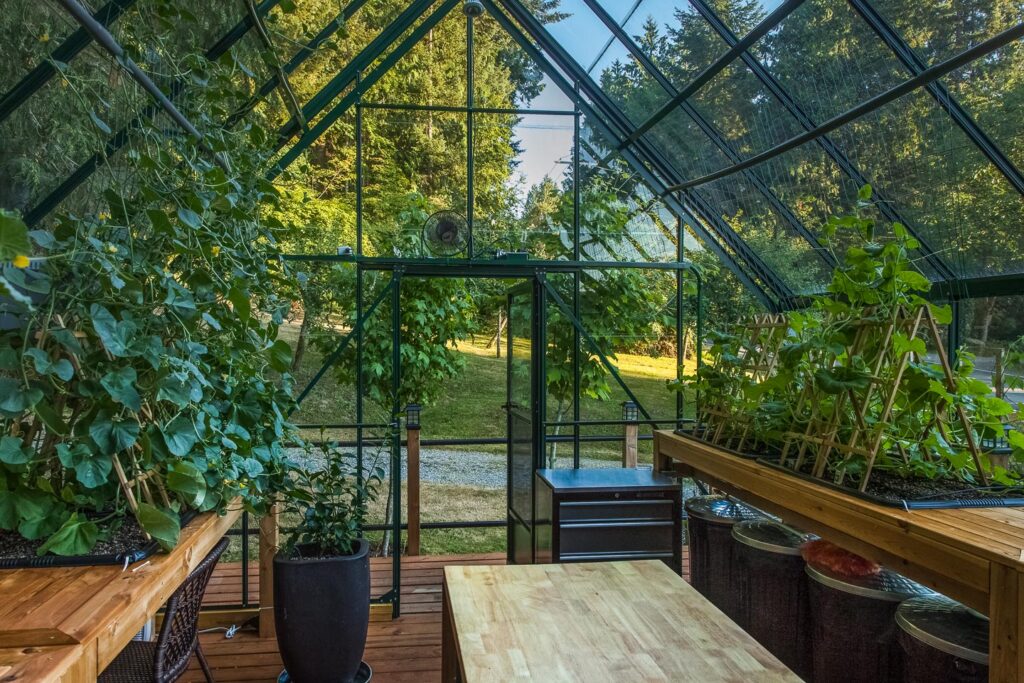
The Step Many Greenhouse Buyers Skip
Most people choose their greenhouse size before they ever think about the layout inside. They picture rows of plants, trays of seedlings, maybe tomatoes climbing toward the roof. It feels like plenty of space.
Then the greenhouse arrives. Benches go in. A walkway is added. A potting area appears. Suddenly, the space feels smaller than expected.
That moment is incredibly common, and it is the reason many greenhouse owners eventually say the same thing:
“I wish I had gone a little bigger.”
Planning the interior layout before choosing your greenhouse size helps avoid that regret. It forces you to think about how the space will actually function day to day, not just how it looks in your imagination.
A Greenhouse Is More Than Plant Space
A greenhouse is a working garden space. Plants may be the reason it exists, but they are only part of what lives inside.
There are seed trays to start, soil to mix, watering cans to carry, and tools that need a home. Mature plants take up more space than seedlings. Vines climb outward. Leaves stretch into walkways. Once those real-world needs enter the picture, the interior layout starts to matter just as much as the structure itself.
The most successful greenhouses usually balance several different functions at once. There is a place to start seedlings, an area where mature plants can grow undisturbed, and a surface where potting and transplanting can happen comfortably. When these areas are planned intentionally, the greenhouse becomes far easier and more enjoyable to use.
Start With How You Move Through the Space
One of the first things to plan is the path you will walk every time you step inside.
A greenhouse may only be used by one or two people most days, but the activities inside involve constant movement. Carrying trays, watering plants, harvesting vegetables, or simply inspecting your crops all require room to move comfortably.
Most gardeners find that a walkway around two feet wide is the minimum that feels practical once plants begin growing. Narrower aisles may seem workable on paper, but they quickly become crowded when leaves and branches reach outward. Many gardeners prefer closer to three feet for a more comfortable walkway.
This is often the first place where greenhouse space disappears. In a greenhouse that is eight feet wide, a comfortable walkway can take up a surprising portion of the interior before a single plant is added. For example, if you plan for a three foot wide walkway down the center, that immediately uses three feet of the interior width, leaving five feet remaining.
Split between the two sides of the greenhouse, that means you have about two and a half feet on each side for everything else. That space needs to accommodate benches, plant containers, raised beds, shelves, or any other growing setup you plan to use.
Once you begin imagining seed trays, tomato pots, watering cans, and tools sharing that space, it becomes easier to see how quickly an interior layout starts to fill. This is why many gardeners discover that even a small increase in greenhouse width can make a noticeable difference in how comfortable the space feels once everything is in place.
How Much Space Do Greenhouse Benches and Walkways Need?
Thinking about typical greenhouse dimensions helps make interior planning much easier.
Most greenhouse benches are between 20 and 33.5 inches deep, with benches around two feet deep being the most common choice. That depth works well for seed trays, flats, and most container plants while still allowing you to comfortably reach everything from the walkway.
Walkways usually fall somewhere between 24 and 36 inches wide, depending on how the greenhouse will be used. Narrower paths may work for simple access, while wider walkways tend to feel much more comfortable when carrying trays, watering plants, or harvesting crops.
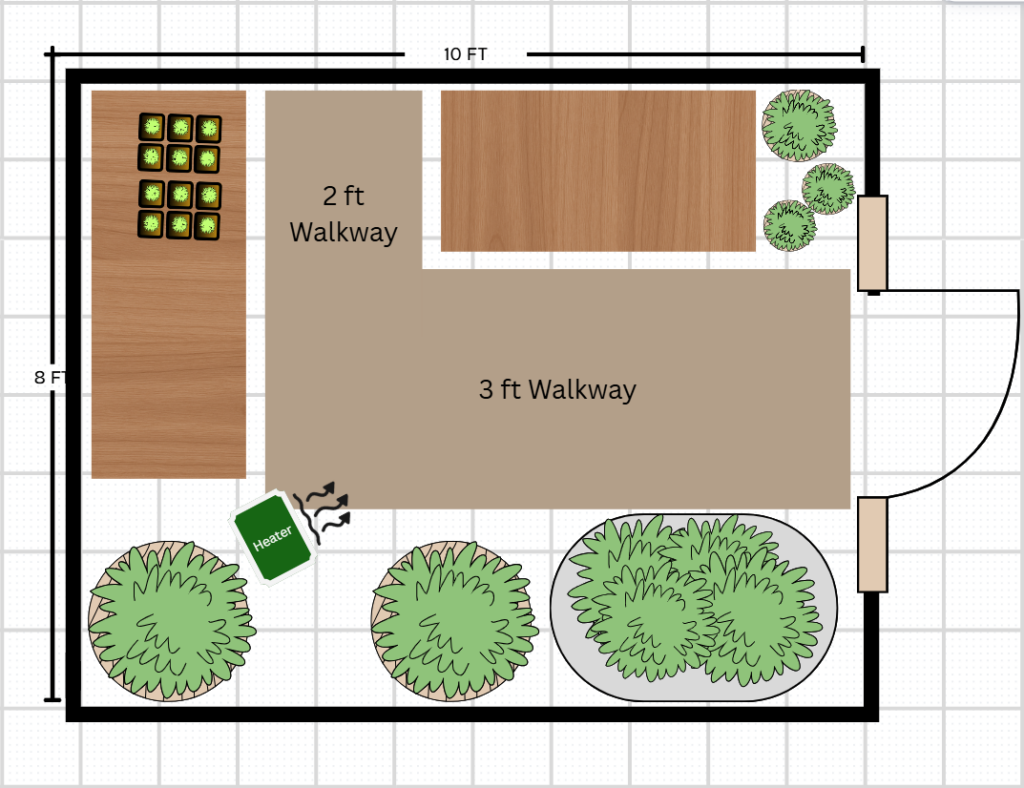
How Wide Should a Greenhouse Walkway Be?
Most greenhouse walkways are 24 to 36 inches wide.
- 24 inches works as a minimum access path.
- 30 to 36 inches is usually more comfortable when carrying trays, watering plants, or harvesting crops.
Wider walkways also reduce the chance of plants crowding the aisle as they mature.
How Deep Should Greenhouse Benches Be?
Most greenhouse benches are 20 to 33.5 inches deep, with around 24 inches being the most common size.
This depth allows gardeners to reach plants from the aisle without stretching too far while still providing enough room for seed trays, pots, and flats.
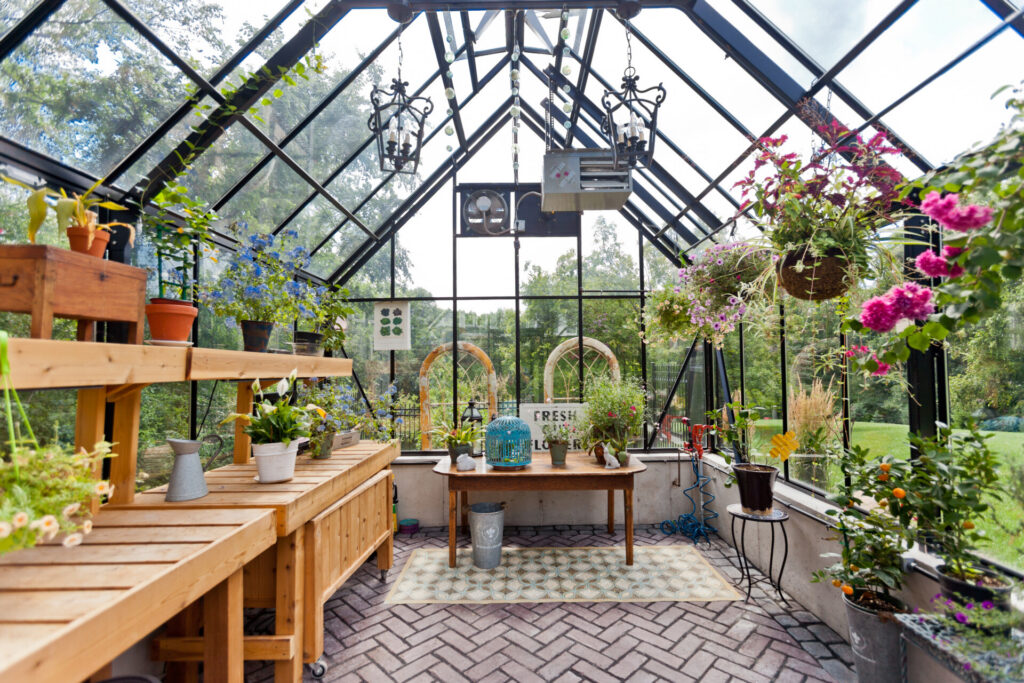
Benches Change Everything
Benches are often what transform a greenhouse from an empty structure into a productive growing environment.
They lift plants to a comfortable working height, improve airflow around containers, and allow gardeners to grow far more within the same footprint. Seed trays, young herbs, and starter plants all thrive on benches where they receive better light and air circulation.
Many greenhouse layouts begin with benches running along the sidewalls with a walkway through the middle. It is a simple arrangement that keeps plants accessible while leaving space to move comfortably through the greenhouse.
But growing plants is only part of what happens inside. A greenhouse is also where much of the day-to-day gardening work takes place. Seeds are started, seedlings are transplanted, soil is mixed, and containers are prepared before moving onto the growing benches.
Because of this, many gardeners find it helpful to include a dedicated work surface within the greenhouse. This might be a potting bench along one wall or a small workspace at the end of the structure where tools, soil scoops, and plant labels can stay within reach.
Once benches and work areas are included in the layout, the interior of the greenhouse begins to take shape quickly. What started as an open space becomes a series of functional zones for growing, preparing, and maintaining plants. Planning these surfaces ahead of time helps ensure the greenhouse remains comfortable to move through while still providing plenty of room to grow.
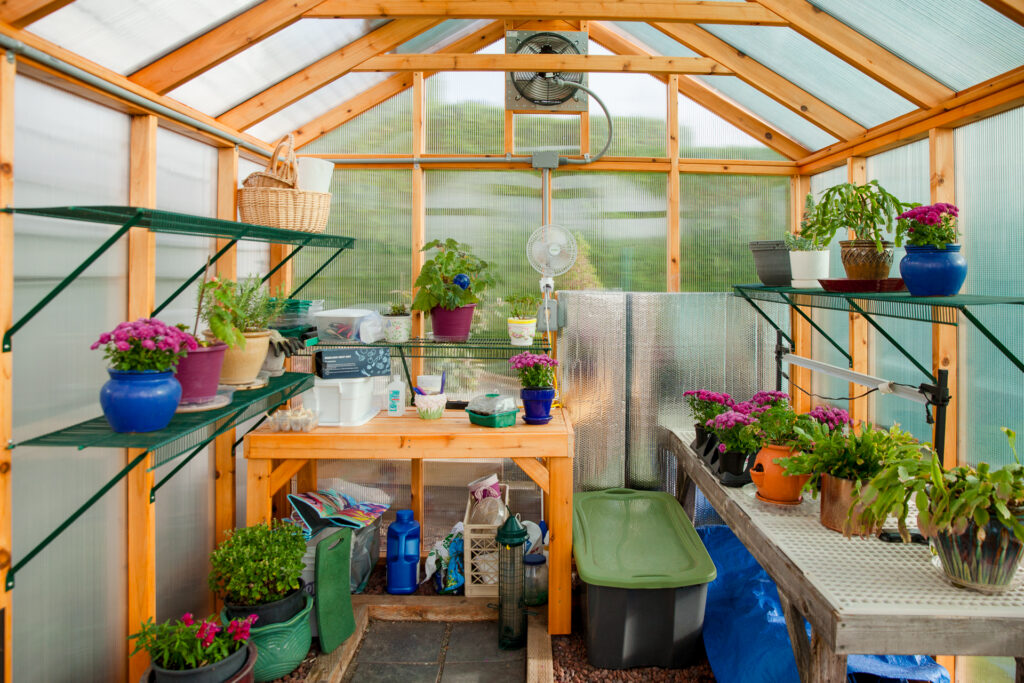
The Power of Vertical Growing
Greenhouses are not just floor space. They are vertical growing environments.
Shelving, hanging baskets, and trellised crops allow gardeners to grow upward as well as outward. Seed trays can occupy upper shelves while larger containers grow below. Climbing crops such as tomatoes, cucumbers, and beans can reach toward the roof where sunlight is strongest.
Using vertical space effectively can dramatically increase how much you can grow in a greenhouse. It also requires some planning. Shelving systems need clearance. Hanging baskets need headroom. Tall crops need enough room so they do not crowd walkways or shade neighboring plants.
Thinking about these vertical elements early helps ensure your greenhouse layout leaves enough room for plants to grow comfortably without crowding walkways or nearby crops.
What Size Greenhouse Do Most Gardeners Choose?
One of the easiest ways to understand greenhouse sizing is to imagine what the interior might realistically hold.
A 6×8 greenhouse can be a wonderful starter space. It works beautifully for seed starting, overwintering a few plants, and nurturing young crops before they move into the garden. For gardeners with limited yard space, it can be an excellent introduction to greenhouse growing.
An 8×10 greenhouse begins to feel more flexible. Benches can run along both sides with a comfortable walkway through the center, leaving room to grow seedlings while also maintaining a small collection of mature plants.
Move up to a 10×12 greenhouse and the interior begins to develop zones. Seed starting might occupy one section while larger crops grow undisturbed in another. A potting surface can live at one end without interrupting the rest of the layout.
The difference is not only the number of plants you can grow. It is how comfortably the greenhouse functions day to day.
What Size Greenhouse Is Best for a Backyard?
For many home gardeners:
- 6×8 greenhouses work well for seed starting and a small number of plants.
- 8×10 greenhouses offer enough space for benches and mature plants at the same time.
- 10×12 greenhouses or larger allow separate growing zones, work surfaces, and greater long-term flexibility.
Many greenhouse owners recommend choosing slightly larger than your initial estimate if space and budget allow.
Why Experienced Greenhouse Owners Say “Go Bigger”
If you spend time talking with greenhouse owners, a common theme begins to appear.
Many of them wish they had chosen a slightly larger greenhouse. It is rarely because their original greenhouse was too small to grow plants. Instead, their gardening expanded once they had a protected growing space.
Seed starting becomes easier. New crops become possible. Overwintering plants suddenly feels achievable. What began as a small growing space quickly becomes one of the most productive areas of the garden.
A little extra space inside the greenhouse makes all of this easier. Walkways feel more comfortable, airflow improves, and plants have room to mature without crowding each other. It also allows the greenhouse to evolve over time as your gardening interests grow.
Choosing the Right Benches and Shelving
Once the greenhouse structure is chosen, the interior framework of benches and shelving brings the space to life.
Benches form the backbone of most greenhouse layouts because they lift plants to a comfortable height and make efficient use of the floor area. Seed trays, young plants, and smaller containers all benefit from being raised off the ground.
Shelving expands that capacity even further. Upper shelves can hold trays during the busy spring months, while the bench space below supports larger plants later in the season. Because shelving systems are often adjustable or removable, they allow the greenhouse to adapt throughout the year as plants grow and change.
Many greenhouse owners find that a well-planned bench and shelving system quickly becomes one of the most valuable parts of the entire space.
Flooring and the Feel of the Space
Flooring is another interior decision that gardeners often postpone, but it plays a meaningful role in how the greenhouse functions.
Some growers prefer gravel because it drains well and is easy to maintain. Others choose pavers or compacted stone to create a more defined walkway through the center of the structure.
Whatever material is used, the floor often helps guide the layout. A clear path naturally separates benches from walkways and makes the greenhouse feel organized even as plants grow larger throughout the season.
Thinking about flooring early helps reinforce the idea that the greenhouse interior is a designed space rather than simply an empty shell. Get some flooring inspiration in the video below:
The Interior Will Evolve Over Time
Greenhouse interiors rarely stay the same.
In the first season, the layout may focus heavily on seed starting and learning how the environment behaves. Over time, shelves may be added, benches may shift slightly, and vertical growing systems may be introduced as crops and growing goals change.
Many gardeners also discover new ways to use the space. A corner may become a place to overwinter potted plants. Hanging baskets may move closer to the roof where light is strongest. A small stool or chair may eventually claim a sunny corner.
Planning the interior before purchasing the greenhouse does not lock you into a permanent layout. It simply gives you a strong starting point.
A Simple Exercise Before Choosing Your Greenhouse Size
Before settling on a greenhouse size, try sketching a quick floor plan.
Picture benches along the sidewalls with a comfortable walkway between them. Add a small potting surface and imagine where larger plants might grow once they begin climbing or spreading.
Even a rough sketch can reveal how quickly the interior fills once the essentials are included. Many gardeners find that this simple exercise helps them choose a greenhouse that will continue to feel comfortable long after the first season.
Key Takeaway When Planning a Greenhouse Interior
When designing a greenhouse interior, remember that space is needed for more than just plants. Walkways, benches, work surfaces, and vertical growing systems all take up room. Planning these elements first helps you choose a greenhouse size that will remain comfortable and productive for years to come.
Design the Inside First
Choosing a greenhouse is exciting, and it is easy to focus on the structure itself. But the interior layout is what determines how enjoyable the greenhouse will be to use every day.
When benches, walkways, shelving, and workspaces are considered early, the greenhouse becomes more than just a place to put plants. It becomes a well organized growing environment that supports everything you want to accomplish as a gardener.
And very often, that thoughtful planning leads to the same conclusion experienced greenhouse growers share again and again.
A little extra space goes a long way.